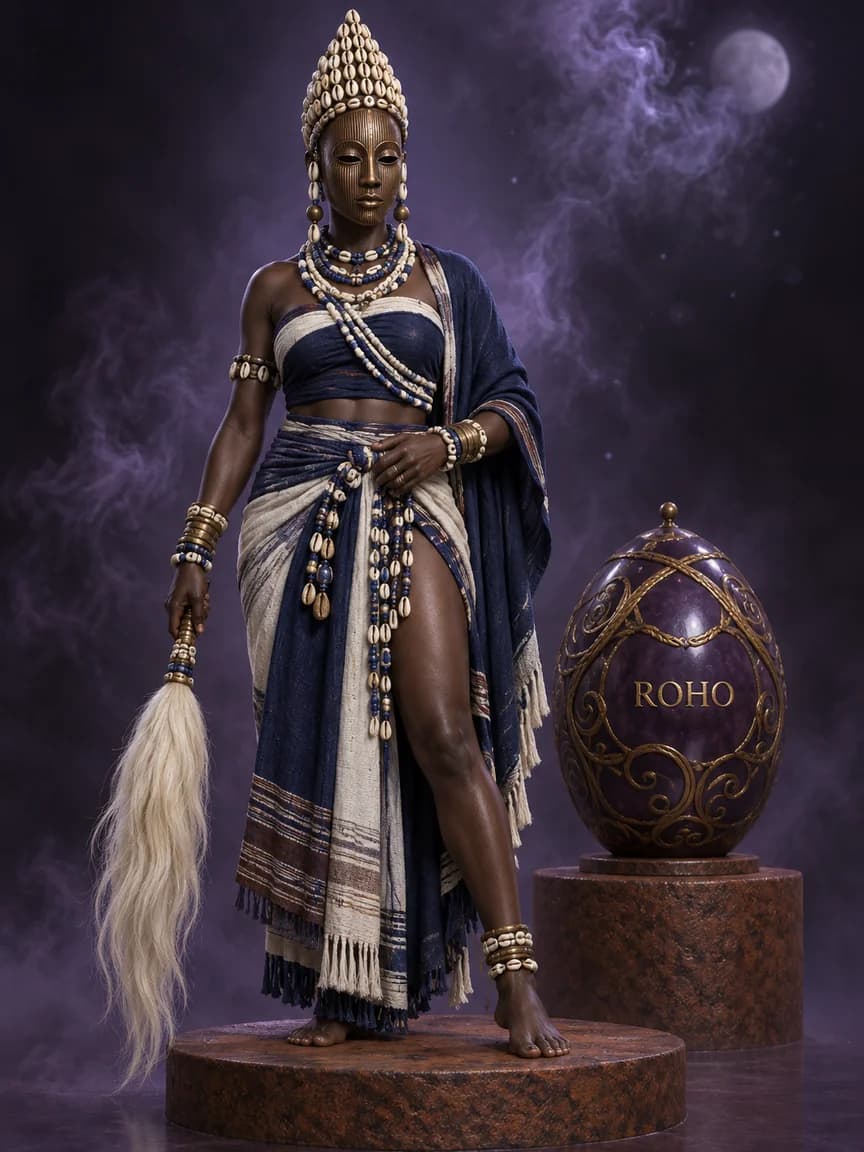
Ori
neutralSpirit of destiny
Ori, a Yoruba word meaning head, is a central metaphysical concept of the Yoruba religion, often personified as an orisha. Beyond the physical head, the Ori designates the inner head, the Ori inu, the part of the soul that carries the destiny proper to each being. According to the cosmology of Ifa, each person chooses their Ori before birth, before Olodumare, the supreme Being. This choice fixes the destiny, ayanmo, that is, the character, the talents, the trials and the great events of a life. The Ori is held to be the most important deity for the individual, for no other orisha can durably help a person without the consent of their own Ori. It is venerated as an orisha, with prayers, offerings and a work on oneself aiming at iwa pele, good character, in order to align the person with their destiny. Ifa divination, associated with Orunmila, helps to know and to appease one's Ori. The concept is found, in close forms, in the Afro-diasporic traditions such as Candomblé, Santería and Haitian vodou.
Era
Yoruba traditions, West Africa
Frequently asked questions
What does Ori mean in the Yoruba religion?
Ori means head. In the spiritual sense, it designates the inner head, the part of the soul that carries each person's destiny. It is often venerated as an orisha in its own right.
Why is the Ori so important?
According to tradition, no orisha can durably help a person without the consent of their own Ori. Progress, balance and success depend on alignment with one's inner head.
How does one honour one's Ori?
It is honoured with prayers, offerings and the pursuit of iwa pele, good character. Ifa divination, bound to Orunmila, helps to know one's destiny and to appease one's Ori.
Related spirits
Further reading
Sources and references
- E. Bolaji Idowu, Olódùmarè: God in Yoruba Belief (1962)
- Jacob K. Olupona and Terry Rey, Òrìṣà Devotion as World Religion (2008)
- , Wikipedia (EN)