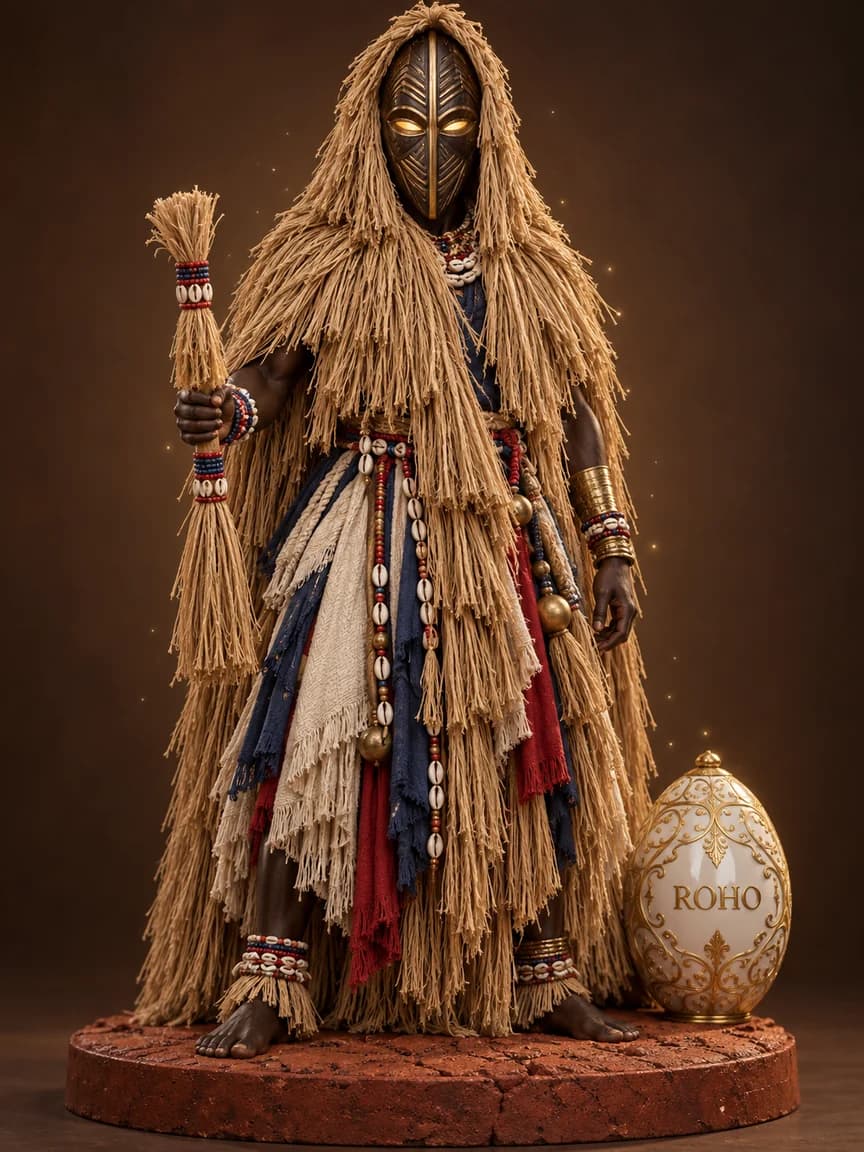
Shakpata
allyGod
Shakpata is a transcription of the name of Sakpata, the deity of the earth and of smallpox of the Fon and Gbe pantheons, venerated in the area of the former Dahomey, that is, present-day Benin, Togo and western Nigeria. Master of the eruptive diseases and of smallpox, he can inflict sickness, madness and ill, but also withdraw them and heal, which makes of him a power at once feared and implored for health. In Fon theology, Sakpata counts among the first children of Mawu-Lisa and receives the dominion of the earth. His cult, highly codified, rests on specialised priests, interdicts and ritual objects, and unfolds into many variants. Among the neighbouring Yoruba, the corresponding figure is Sopona or Shakpana, and in the Afro-diasporic religions it is prolonged under names such as Omolu or Sakpata-Omolu. Sagbate and Shakpata designate the same deity.
Powers & Attributes
Role in the ROHO universe
Keeper of the two hands. SHAKPATA sends the fevers and withdraws them as the measure demands. Bound to the Fon/Eʋe pantheon.
Sacred Mask
An ancient ritual mask of sacred wood, old metal and black stone, engraved with symbols of smallpox and madness, embodiment of the power of Shakpata
Era
Ancient cycle
Frequently asked questions
Are Shakpata and Shakpana linked?
Yes. Shakpata (Sakpata) among the Fon and Shakpana or Sopona among the Yoruba designate the same figure of the deity of smallpox and the eruptive diseases, under distinct traditions and spellings.
Why is Shakpata associated with madness and sickness?
As master of the eruptive diseases and of smallpox, he holds the power to send fevers, afflictions and disorders, but also to withdraw them. This double power to harm and to heal grounds the respect and the fear that surround him.
Can the deity's name be pronounced freely?
In several traditions, the true name of the deity of smallpox is surrounded by interdicts and often avoided, for fear of its power. Substitute or praise names are then resorted to.
Related spirits
Further reading
Sources and references
- Melville J. Herskovits, Dahomey: An Ancient West African Kingdom (1938)
- Pierre Verger, Notes sur le culte des orisa et vodun à Bahia, la Baie de Tous les Saints, au Brésil, et à l'ancienne Côte des Esclaves en Afrique (Mémoires de l'IFAN n° 51) (1957)
- Robert Farris Thompson, Flash of the Spirit: African and Afro-American Art and Philosophy (1983)