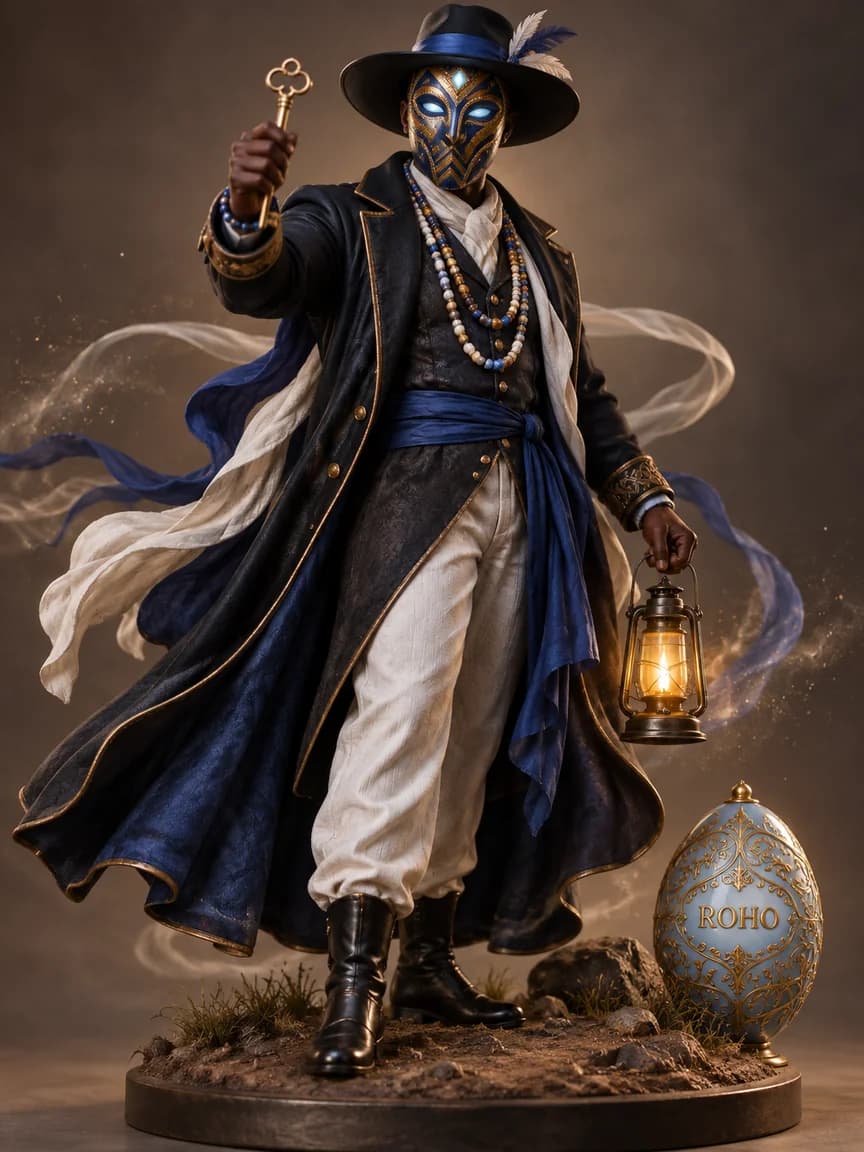
Mèt Kalfou
neutralNight crossroads, thresholds, tipping point
Mèt Kalfou, the Master of the Crossroads, is the lwa of crossroads at night in Haitian Vodou. Served in the Petro rite, he is the nocturnal counterpart of Papa Legba: where Legba opens the gates by day and lets prayers through, Kalfou holds the crossroads once the light has fallen and decides what may cross. He is granted authority over disruptive forces, and this is what made his reputation, often distorted: Kalfou is not evil, he is the one who controls its passage. Nothing dangerous circulates unless he has allowed it, which makes him as much a guardian as a threat. He is described as a sturdy man, sometimes with red eyes, and his hour is midnight. His servants hold him to be demanding and swift: he gives back what is asked of him, but he keeps the accounts. In Vodou thought the crossroads is not a neutral place: it is the precise spot where a life can tip over, and Kalfou is its master.
Powers & Attributes
Role in the ROHO universe
Bound to one of the five elements of the cosmic balance. Its power springs from the energy proper to its tradition, and from no other.
Sacred Mask
A mask carved of ancient energy, a symbol of the cosmic force proper to its pantheon.
Era
1500 to 1900: Cycle of the Rebels
Words of the Spirit
“Every path that crosses another forces a choice.”
Frequently asked questions
Who is Mèt Kalfou in Haitian Vodou?
Mèt Kalfou, the Master of the Crossroads, is the lwa of crossroads at night, served in the Petro rite. He is the nocturnal counterpart of Papa Legba and decides what may cross the crossroads once the light has fallen.
What is the difference between Papa Legba and Mèt Kalfou?
Legba opens the gates by day and lets prayers through to the lwa. Kalfou holds the same crossroads by night and controls the passage of disruptive forces. He is not evil: he is the one without whose consent danger does not circulate.
Related spirits
Further reading
Sources and references
- Maya Deren, Divine Horsemen: The Living Gods of Haiti (1953)
- Alfred Métraux, Le Vaudou haïtien (1958)
- Leslie G. Desmangles, The Faces of the Gods: Vodou and Roman Catholicism in Haiti (1992)