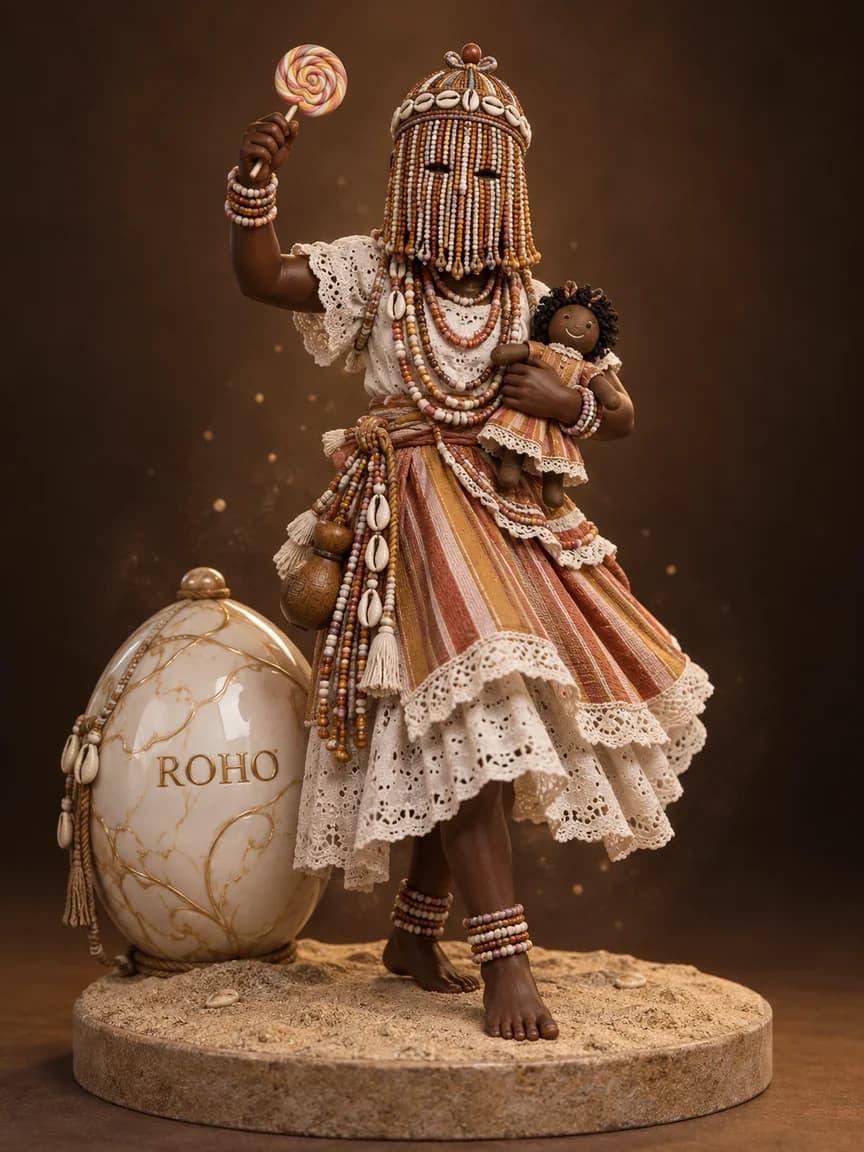
Ere
neutralSpirit
The erê designates a spiritual entity with a childlike aspect proper to the Afro-Brazilian religions, in particular Candomblé, whose roots reach into the Yoruba tradition of West Africa. The term derives from the Yoruba erè, which evokes play and amusement. In Candomblé, the erê manifests in the initiate immediately after the trance of possession by the orisha: it constitutes a second state, distinct from the state of the saint, characterised by childlike gestures, voice and behaviour. It plays the role of intermediary between the person and their tutelary deity, conveying messages, counsel and at times care. During the initiatory seclusion, the erê holds an important place, for it is often through it that the words of the new initiate's orisha pass. It is distinguished from the ibeji, spirit of the sacred twins, and from the simple notion of a child, which Yoruba names omo kékeré. A figure of purity, spontaneity and play, the erê embodies a living link between the world of humans and that of the orishas, and it remains an active component of the ceremonies in the terreiros of Brazil.
Powers & Attributes
Role in the ROHO universe
Sentinel of the hearth. ERE keeps the domestic thresholds where human life is woven. Bound to the Yoruba pantheon. Its alignment depends on the invoker's protocol.
Sacred Mask
An ancient ritual mask of sacred wood, old metal and black stone, engraved with symbols of initiation, embodiment of the power of Ere
Era
Ancient cycle
Frequently asked questions
What is the erê in Candomblé?
The erê is a spiritual entity with a childlike aspect that manifests in the initiate just after the orisha's trance. It serves as intermediary between the person and their deity, conveys the orisha's messages and holds an important role during the period of initiation and seclusion.
What is the origin of the word erê?
The word erê comes from the Yoruba erè, which means to play or to have fun. It refers to the entity's childlike, spontaneous, playful behaviour when it manifests. The erê developed above all in the Afro-Brazilian religions, from West African Yoruba roots.
What is the difference between the erê and the ibeji?
The erê is a childlike spiritual state that manifests in the initiate after the trance and serves as the orisha's messenger. The ibeji, for its part, refers to the sacred twins of the Yoruba tradition. Both touch on childhood, but the ibeji designates the twin spirits, while the erê is an intermediary manifestation proper to Candomblé.