Egungun
neutralMasquerade of the ancestors
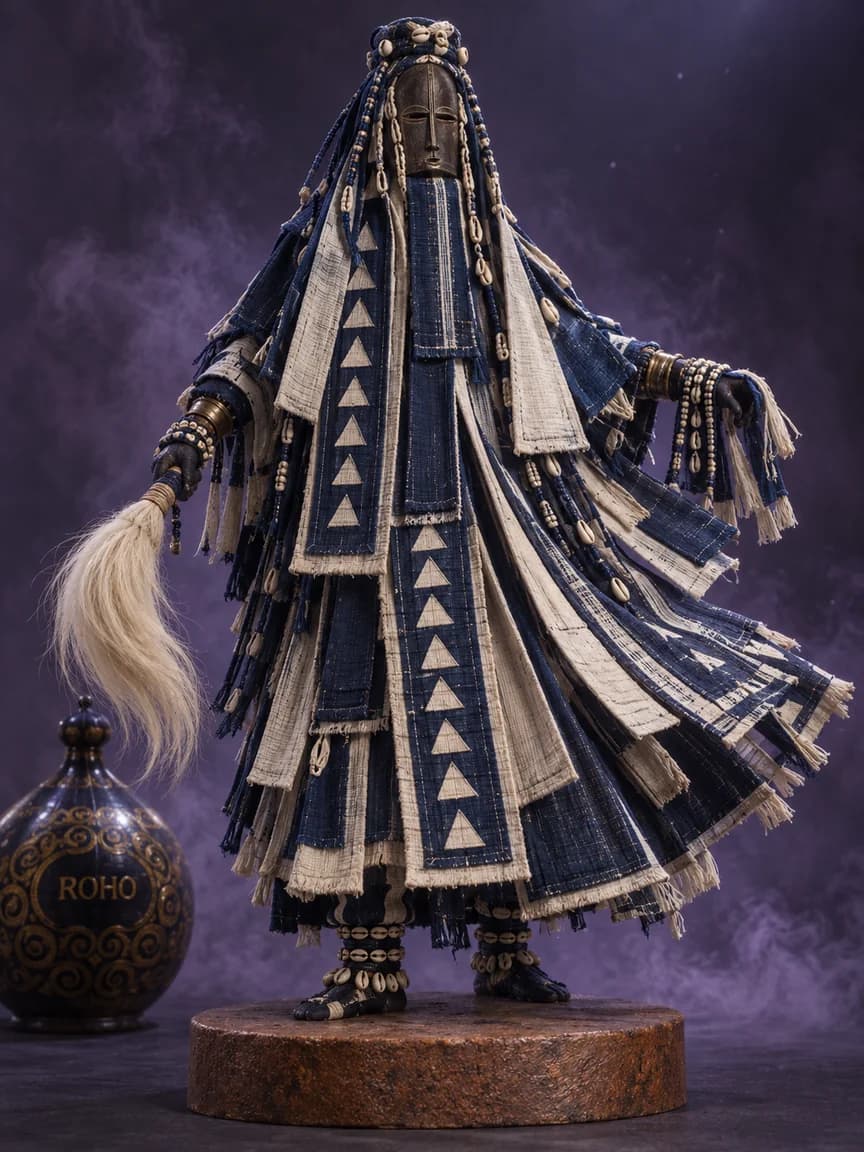
Egungun designates, among the Yoruba of south-western Nigeria and Benin, the masked and costumed apparitions that embody the ancestors returned among the living. The term evokes the collective of the dead, whose presence the Egungun makes visible. In the Yoruba religion, the ancestors watch over their descendants, dispense counsel and enforce the moral order. Annual ceremonies, the Odun Egungun, honour the departed and tighten the bonds between families, communities and lineages. The costume constitutes the heart of the rite. It layers precious cloths, notably the indigo-and-white striped cloth, and ornamented strips which, as they whirl, dispense a breath of blessing. Hidden amulets link the dancer to the world of the spirits. The men wear the costume and dance, while the women sing the praises, invoke and sustain the organisation. According to an Ifa tradition, women are said to have first held authority over the Egungun before ceding it to the men. The cult is practised above all in Yoruba country and is found, through the diaspora, in the region of Bahia in Brazil.
Era
Yoruba traditions, West Africa
Frequently asked questions
What does the Egungun represent?
The Egungun embodies the ancestors returned to visit the living. Through masked and costumed dancers, the departed counsel their descendants and watch over the respect of the community's moral order.
How does an Egungun festival unfold?
The Odun Egungun is an annual ceremony in which the masked dancers appear in public. The men wear the costumes and dance, the women sing praises and invocations, and the community honours its lineages.
Where is the cult of the Egungun practised?
It is practised above all among the Yoruba of south-western Nigeria and Benin. Through the slave trade and the diaspora, it also took root in Brazil, notably in the region of Bahia and on the island of Itaparica.
Related spirits
Further reading
Sources and references
- Margaret Thompson Drewal, Yoruba Ritual: Performers, Play, Agency (1992)
- , Encyclopædia Britannica, Egungun
- , Wikipedia (FR/EN)