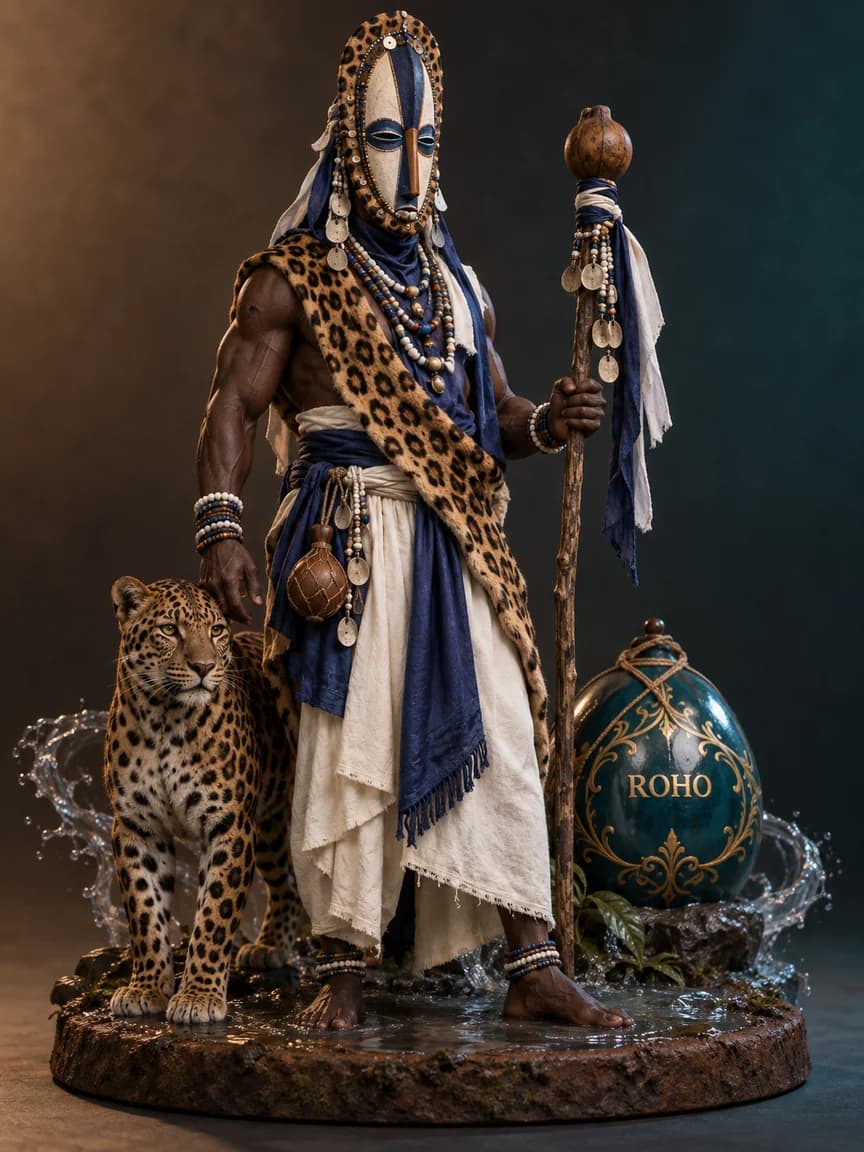
Agassou
allyLeopard, Dahomean memory, springs
Agassou is the lwa who guards ancestral traditions in Haitian Vodou. Served in the Rada rite, he is closely bound to Dahomey: the royal tradition of Abomey tells that Princess Aligbonon united with a leopard, and that Agassou was born of this union, founding ancestor of the dynasty. Carried to the Caribbean with the captives of the Bight of Benin, he became there the very memory of the origin, the one who makes sure the bond with the land of before is not broken. He is associated with the leopard, with crabs and with freshwater springs, and he is said to dwell where water wells up from the ground. His servants recognise in him a particular demand: he asks that the rites be done properly, in the old way, and he is angered by shortcuts. In a cult born of deportation, this role is anything but minor: Agassou is the lwa who prevents forgetting, and serving him amounts to affirming that a lineage survived the crossing.
Powers & Attributes
Role in the ROHO universe
Bound to one of the five elements of the cosmic balance. Its power springs from the energy proper to its tradition, and from no other.
Sacred Mask
A mask carved of ancient energy, a symbol of the cosmic force proper to its pantheon.
Era
1500 to 1800: Cycle of the Diaspora and Remembrance
Words of the Spirit
“A people who forget their spring will drink any water.”
Frequently asked questions
Who is Agassou in Haitian Vodou?
Agassou is the lwa who guards ancestral traditions, served in the Rada rite. He embodies the memory of Dahomey and makes sure the bond with the land of origin is not broken. He is associated with the leopard and with freshwater springs.
Why is Agassou linked to the leopard?
The royal tradition of Abomey tells that Princess Aligbonon united with a leopard and that Agassou was born of this union, founding ancestor of the dynasty. The leopard motif crossed to the Caribbean with the captives of the Bight of Benin.
Related spirits
Further reading
Sources and references
- Alfred Métraux, Le Vaudou haïtien (1958)
- Leslie G. Desmangles, The Faces of the Gods: Vodou and Roman Catholicism in Haiti (1992)
- Laënnec Hurbon, Les Mystères du vaudou (1993)