Osumare
neutralSerpent orisha of the rainbow
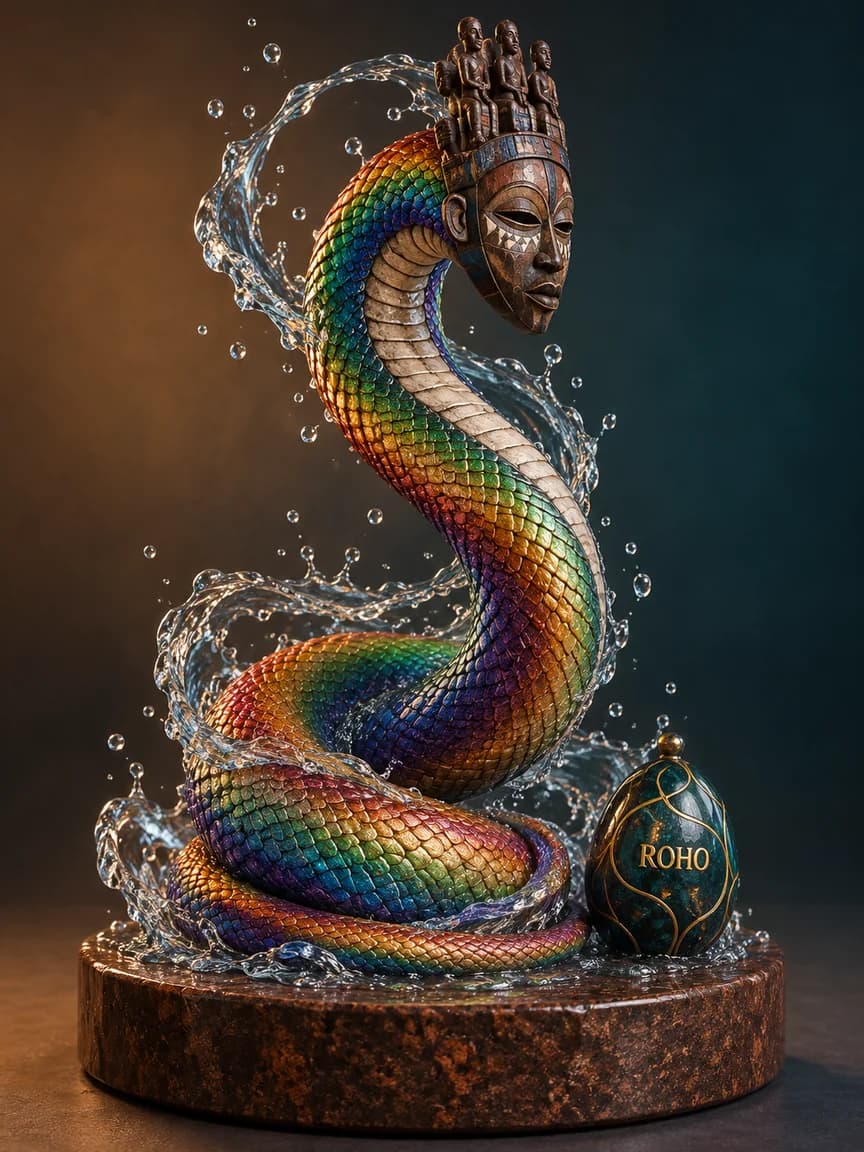
Osumare, also Oshumare or Oxumaré, is the Yoruba orisha of the rainbow, represented as a divine serpent that links the sky and the earth. His name designates at once the rainbow and the mythical serpent that bites its own tail, an image of cycles and eternal recommencement. He is often figured in the guise of the python, ere, also called the celestial python. The rainbow appears only when water and sunlight unite, so that Osumare is held to be an androgynous essence, at once masculine and feminine. He is the orisha of cycles, transformation, movement and balance, and paradoxically of permanence. Patron of children, he is associated with the umbilical cord, the link between the world of the living and that of the ancestors. Certain narratives place him in the service of Sango, carrying rainwater up to the clouds. His diasporic equivalents are the Dan Ayida Wedo of the Fon of Benin, the orixá Oxumaré of Brazil and the lwa Damballa of Haiti.
Era
Yoruba traditions, West Africa
Frequently asked questions
What does Osumare represent?
Osumare represents the rainbow and the serpent that links the sky and the earth. He is the orisha of cycles, transformation, movement and renewal, the symbol of the serpent that bites its own tail.
Why is Osumare considered androgynous?
The rainbow is born of the meeting of water and sunlight, unions of the feminine and the masculine. Osumare carries this double nature within him and passes for an essence at once masculine and feminine.
What are Osumare's equivalents in the diaspora?
Osumare corresponds to the Dan Ayida Wedo of the Fon of Benin, to the orixá Oxumaré of Brazilian Candomblé and to the lwa Damballa of Haiti, all serpents associated with the rainbow and the waters.
Related spirits
Further reading
Sources and references
- Pierre Fatumbi Verger, Orixás: Deuses Iorubás na África e no Novo Mundo (1981)
- Robert Farris Thompson, Flash of the Spirit: African and Afro-American Art and Philosophy (1983)
- , Wikipedia (FR/EN)