Mout
neutralMother goddess of Thebes
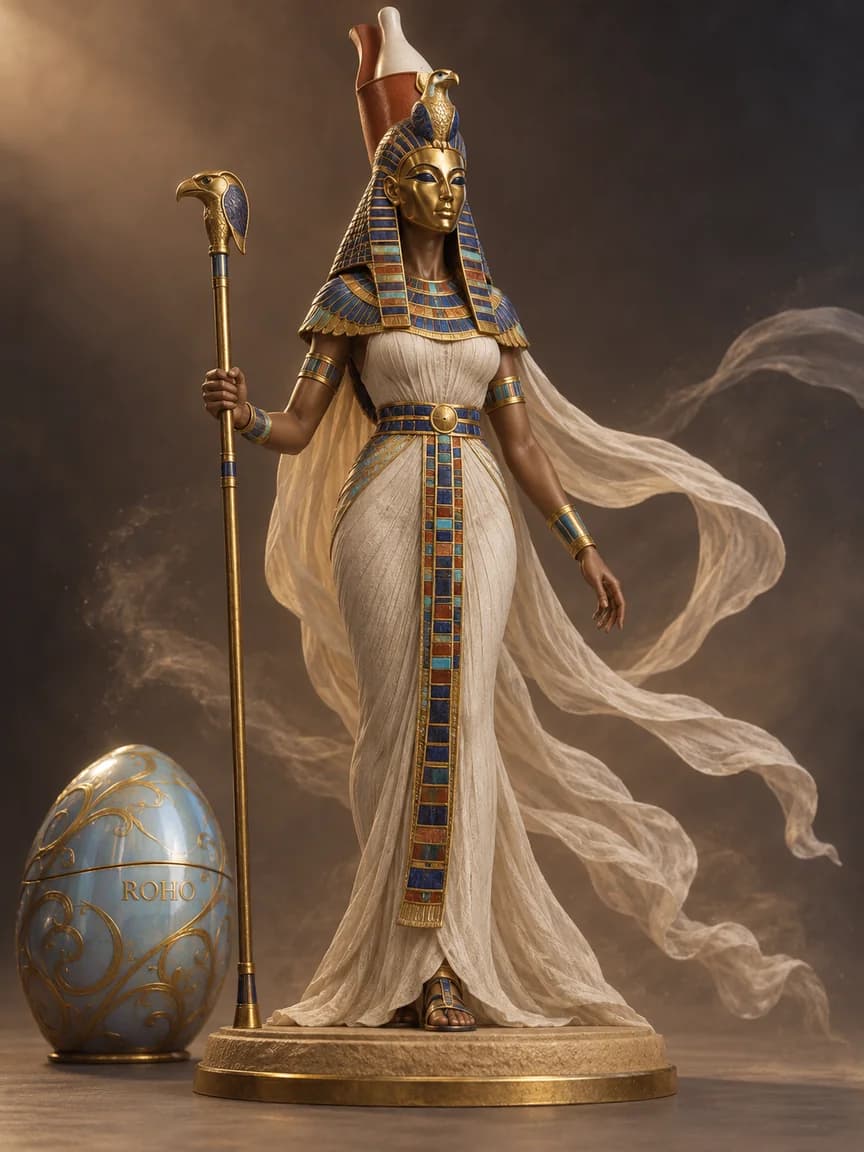
Mut, whose name means the Mother, is a major goddess of the Egyptian pantheon, venerated principally at Thebes. Wife of the god Amun and mother of the lunar god Khonsu, she forms with them the Theban triad. Her great temple stands to the south of Karnak, around the crescent-shaped sacred lake named the Isheru. Mut embodies divine motherhood and kingship. Her iconography shows her as a woman crowned with the vulture headdress surmounted by the double crown, the pschent, which unites Upper and Lower Egypt. A protective but also fearsome deity, she can take the form of a lioness, then coming close to the Distant Goddess and to Sekhmet, the solar eye of Ra. Her cult knew a great flowering under the New Kingdom, associated with the great Theban festivals such as the Opet festival and the beautiful festival of the Valley. She was also honoured at Napata, Tanis and Memphis.
Era
3,000 to 30 BCE
Frequently asked questions
Who is Mut's husband?
Mut is the wife of the god Amun, king of the gods at Thebes. Together they have for son the lunar god Khonsu, forming the Theban triad.
Where was Mut venerated?
Her principal sanctuary was at Thebes, to the south of the Karnak complex, around the sacred lake named the Isheru. She was also honoured at Napata, Tanis and Memphis.
Why is Mut bound to a lioness?
In her fearsome aspect, Mut could take on the form of a lioness, coming close to Sekhmet and to the theme of the solar eye, at once protective and dangerous.
Related spirits
Further reading
Sources and references
- Richard H. Wilkinson, The Complete Gods and Goddesses of Ancient Egypt (2003)
- George Hart, The Routledge Dictionary of Egyptian Gods and Goddesses (2005)
- , Wikipedia (FR/EN)