Iroko
neutralSpirit of the sacred tree
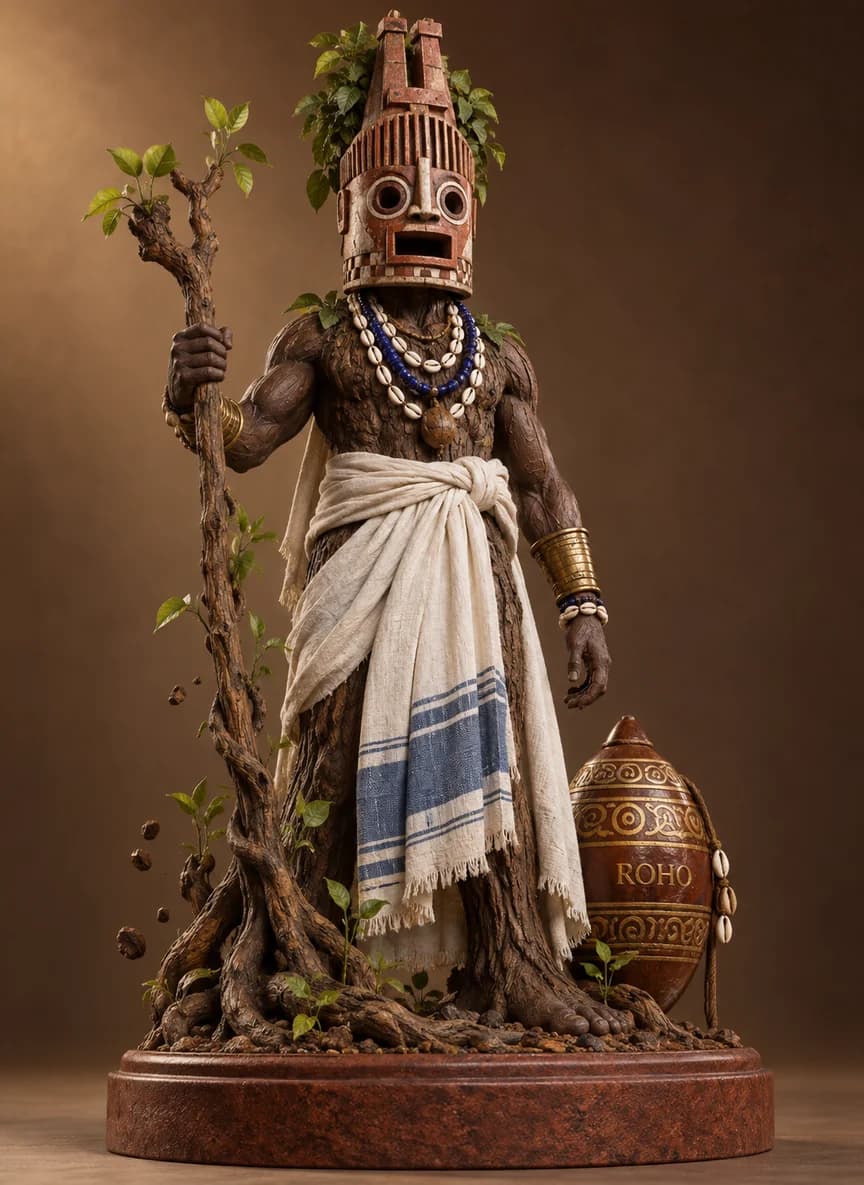
Iroko, in Yoruba Ìrókò, designates at once a great tree of the forests of tropical West Africa, Milicia excelsa, and the powerful spirit that the Yoruba believe resides in it. Able to live several centuries, the iroko is held to be sacred in Nigeria, in Benin and in Togo. The Yoruba say the tree shelters an animating force named Olúwéré, embodied by the Iroko-man, a spirit whose crown is said to touch the sky. According to the belief, whoever sees the Iroko-man face to face loses their reason and dies quickly. To fell an iroko without precaution draws great misfortune upon the woodcutter and his family, so the felling is accompanied by protective prayers. It is also told that the spirit remains prisoner of the worked wood and makes itself heard in the houses built from it. The tree receives offerings laid at its foot to obtain prosperity and protection, for it symbolises longevity, strength and stability. In several Afro-diasporic traditions, the iroko is the object of a cult associated with time and with the continuity between the living, the ancestors and the world of the spirits.
Era
Yoruba traditions, West Africa
Frequently asked questions
What is the Iroko in the Yoruba tradition?
The Iroko is at once a sacred tree of West Africa and the spirit that resides in it, called the Iroko-man. It symbolises longevity and strength, and receives offerings for prosperity and protection.
Why do the Yoruba fear the Iroko?
It is believed that seeing the Iroko-man face to face drives one mad and causes a swift death. Felling an iroko without precaution would draw great misfortune upon the person and their family, whence protective prayers.
Where is the cult of the Iroko found?
It is venerated among the Yoruba of south-western Nigeria, in Benin and in Togo, as well as in several Afro-diasporic traditions where the tree is associated with time and with continuity with the ancestors.
Related spirits
Further reading
Sources and references
- J. Omosade Awolalu, Yoruba Beliefs and Sacrificial Rites (1979)
- E. Bolaji Idowu, African Traditional Religion: A Definition (1973)
- , Wikipedia (EN/FR)