Avrikiti
allyGod
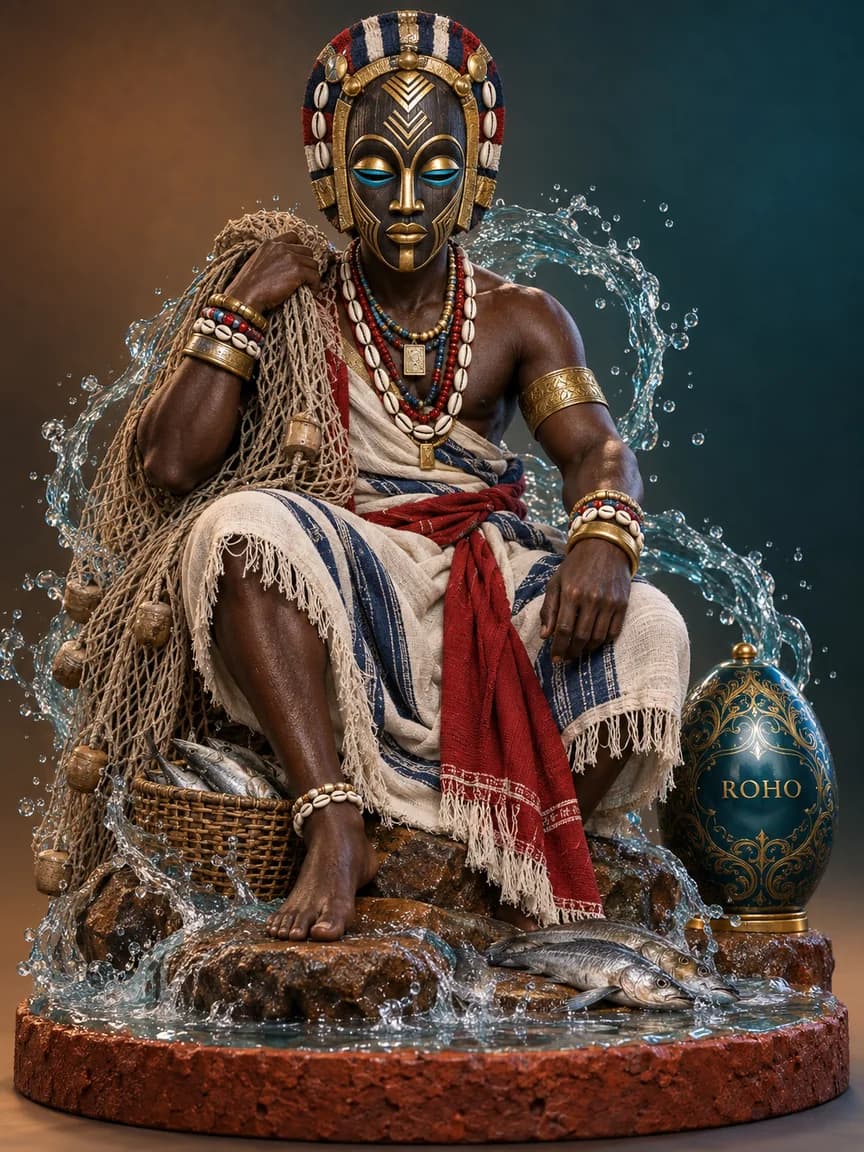
Avrikiti is the vodun of the fishermen among the Fon and the neighbouring peoples of the coast of present-day Benin, the old kingdom of Dahomey. A protective deity of fishing and of the communities that live from the sea, he watches over the abundance of the catch and the safety of the men gone out on the waters. Tradition reports that statues representing him, in a seated position, were raised on the beaches of the fishing villages. Fishermen and elders came to leave offerings there and perform sacrifices, often each year, to obtain a clement sea and a generous fishing season. His cult is anchored in the coastal localities of the Gulf of Benin, a region where fishing remains a vital activity. Distinct from the great water deities such as Agbe, lord of the sea, Avrikiti holds a more modest but concrete place in the daily life of the coastal populations. He remains known above all through the ethnographic records and the compilations of the deities of the Fon pantheon.
Powers & Attributes
Role in the ROHO universe
Voice of its pantheon. AVRIKITI carries the memory of its tradition and weaves a thread into the Mabioni. Bound to the Fon/Eʋe pantheon.
Sacred Mask
An ancient ritual mask of polished ebony, mother-of-pearl and shells, engraved with symbols of fishing, embodiment of the power of Avrikiti
Era
Ancient cycle
Frequently asked questions
Who is Avrikiti?
Avrikiti is the vodun of the fishermen among the Fon and the coastal peoples of present-day Benin, the old kingdom of Dahomey. He protects fishing, watches over the abundance of the catch and over those who live from the sea.
How was Avrikiti honoured?
Tradition reports that statues representing him seated were placed on the beaches of the fishing villages. Fishermen and elders left offerings there and performed sacrifices, often each year, to obtain a favourable sea.
Where was Avrikiti venerated?
His cult is attached to the fishing communities of the coast of the Gulf of Benin, where the sea and the lagoons are a vital resource. He holds there a place close to daily life, distinct from the great water deities such as Agbe.
Related spirits
Further reading
Sources and references
- Alfred Burdon Ellis, The Ewe-speaking Peoples of the Slave Coast of West Africa (1890)
- Edison Carneiro, Religiões negras: notas de etnografia religiosa (1936)