Ammit
neutralThe Great Devourer
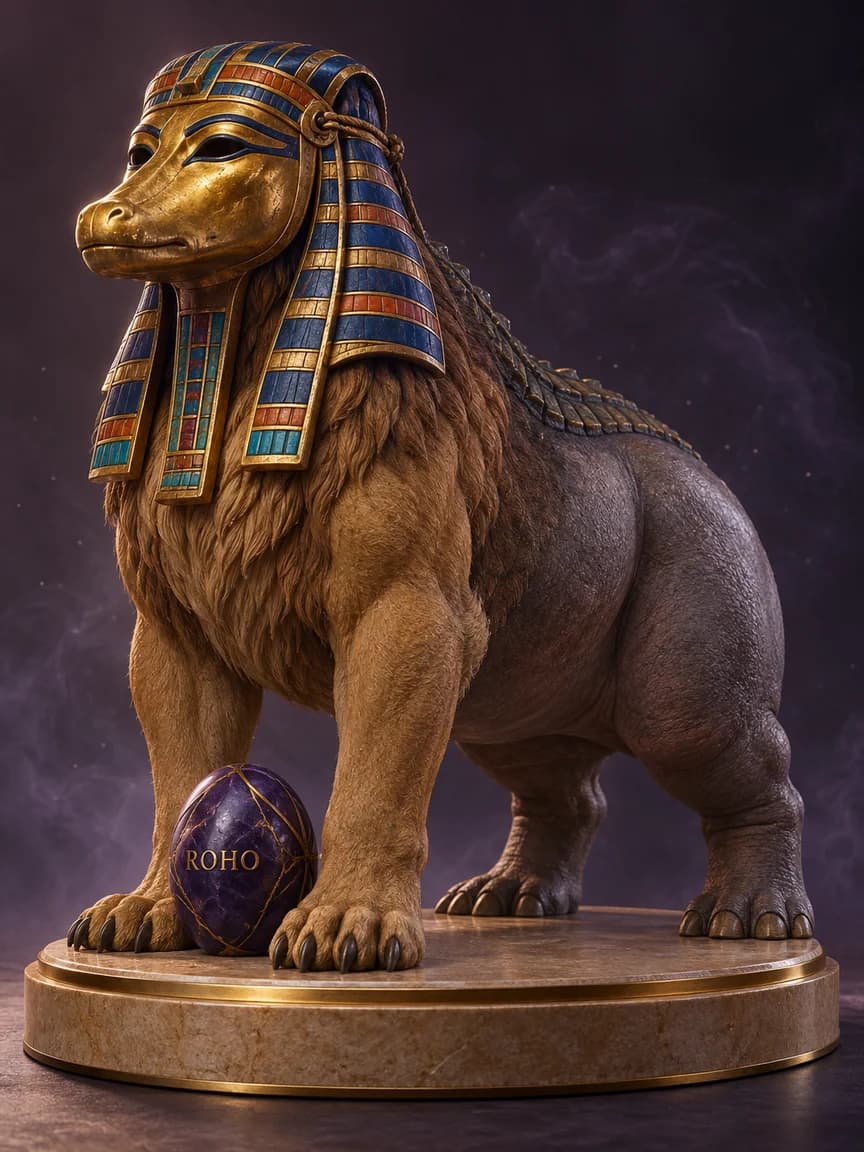
Ammit, gallicised as Ammout, is a creature of Egyptian mythology whose name means the Devourer of the dead. A composite being, she unites three feared animals of the Nile: the head of a crocodile, the forequarters and front paws of a lion, and the hindquarters of a hippopotamus. She appears in the scene of the weighing of the heart, or psychostasia, which takes place in the hall of the Two Truths, at the tribunal of Osiris. The heart of the deceased, the seat of conscience, is placed on one pan of the scales, while the other bears the feather of Maat, the symbol of truth and justice. Anubis conducts the operation and Thoth records its result. If the heart, weighed down by faults, proves heavier than the feather, Ammit devours it at once. The deceased is then deprived of all survival in the beyond, a fate considered the second death, definitive annihilation. Posted near the scales, Ammit does not judge: she executes the sentence and guarantees that only the just accede to eternal life. Her composite form becomes fixed above all after the reign of Akhenaten.
Era
3,000 to 30 BCE
Frequently asked questions
Of which animals is Ammit composed?
She associates three animals feared by the Egyptians: the head of a crocodile, the forequarters of a lion and the hindquarters of a hippopotamus, three predators bound to the dangers of the Nile.
What is Ammit's role at the weighing of the heart?
She stands near the scales of the tribunal of Osiris. If the heart of the deceased weighs heavier than the feather of Maat, she devours it, condemning the deceased to annihilation.
Is Ammit a demon or a guardian of order?
She is not a force of evil but an executor of divine justice. By devouring impure hearts, she guarantees that only the just deceased accede to eternal life.
Related spirits
Further reading
Sources and references
- George Hart, The Routledge Dictionary of Egyptian Gods and Goddesses (2005)
- Raymond O. Faulkner, The Ancient Egyptian Book of the Dead (1985)
- , Wikipedia (FR/EN)