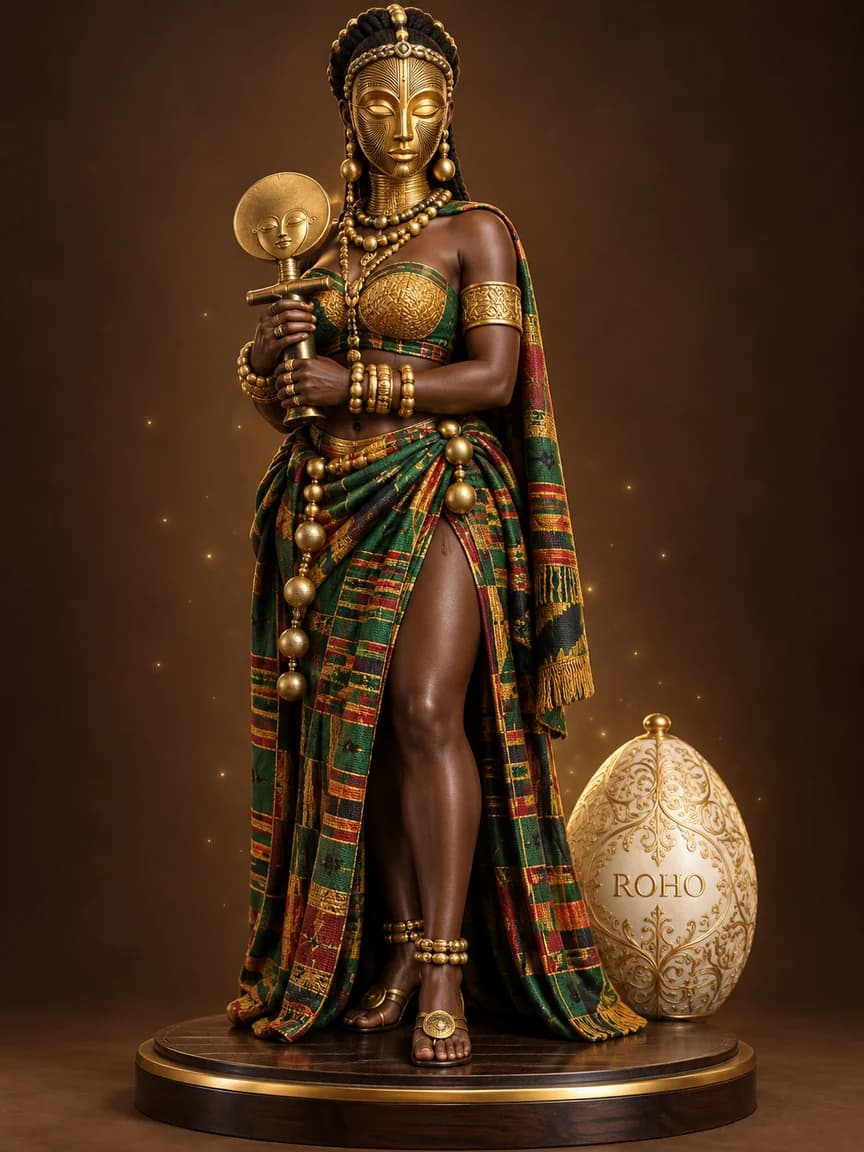
Akwaba
allyGoddess
In the Akan culture of Ghana and Côte d'Ivoire, the akua'ba, also spelled akwaba or akuba, is a ritual fertility figurine. Its name translates as the child of Akua, after the legend of a woman named Akua who, long childless, carried a wooden statuette consecrated by a priest until she conceived. Carved above all among the Ashanti and the Fanti, these effigies are recognised by their great flat, discoid head, a stylisation of the Akan ideal of beauty: a high, oval forehead gently flattened in early infancy. Young women wishing to bear children carry them against the back or at the waist, tend them and dress them like real children, in a logic of sympathetic magic aiming at a happy pregnancy and beautiful offspring. The Akan word akwaaba means, moreover, welcome, which explains the frequent association of this name with hospitality and the home. The akua'ba thus belongs more to the ritual object and the symbol of motherhood than to a constituted deity, even though it strongly embodies the values of fertility and of the continuity of the lineage.
Powers & Attributes
Role in the ROHO universe
Sentinel of the hearth. AKWABA keeps the domestic thresholds where human life is woven. Bound to the Akan pantheon.
Sacred Mask
An ancient ritual mask of sacred wood, old metal and black stone, engraved with symbols of welcome and motherhood, embodiment of the power of Akwaba
Era
Ancient cycle
Frequently asked questions
What does the name akua'ba mean?
It translates as the child of Akua, after the name of an Akan woman long childless who carried a consecrated wooden statuette before conceiving. The Akan word akwaaba means, moreover, welcome.
What was an akua'ba used for?
Consecrated by a priest, it was carried and tended by women wishing to bear children, in a practice of sympathetic magic meant to favour a pregnancy and ensure the beauty of the child to come.
Why is its head so broad and flat?
The great discoid head stylises the Akan ideal of beauty: a high, oval forehead, gently flattened in early infancy by a soft shaping of the infant's still supple skull.
Related spirits
Further reading
Sources and references
- M. D. McLeod, The Asante (1981)
- Elisabeth L. Cameron, Isn't S/He a Doll? Play and Ritual in African Sculpture (1996)