Seshat
neutralGoddess of writing and architecture
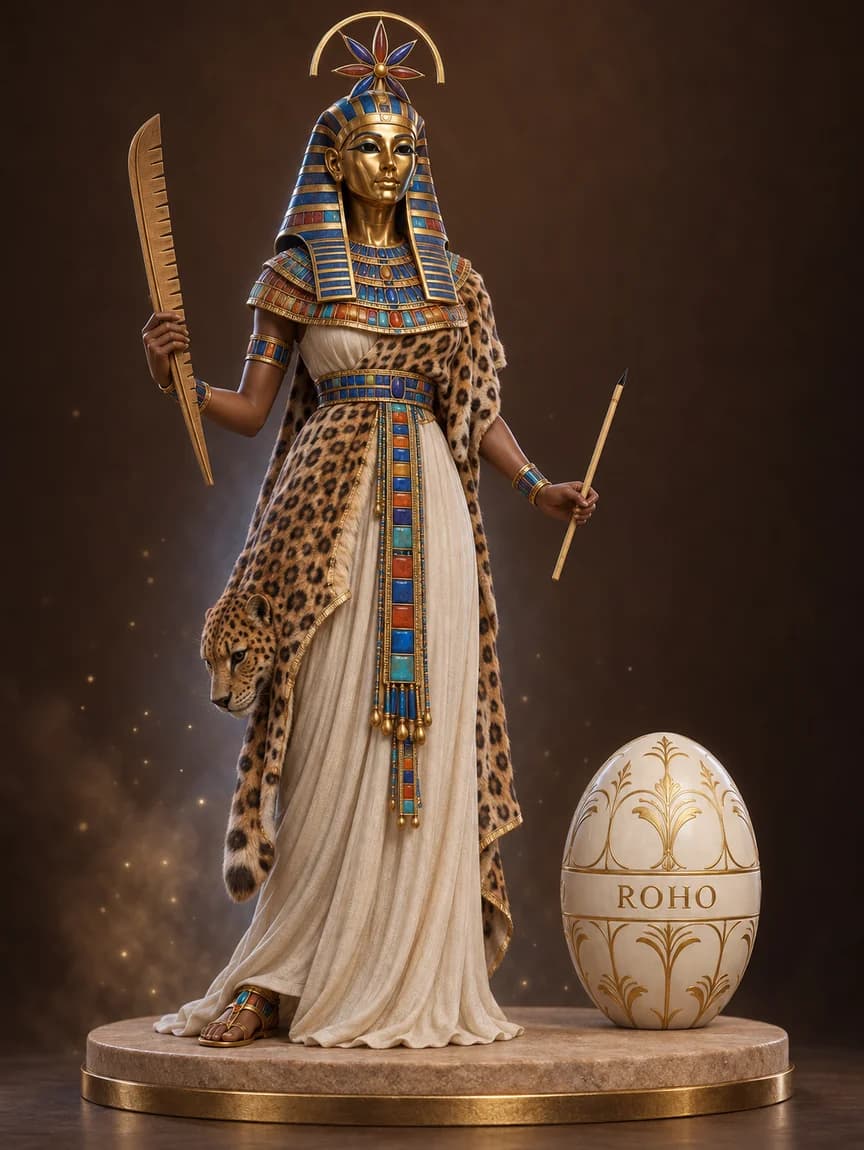
Seshat, whose name means "she who writes" or "the scribe", is the Egyptian goddess of writing, measurement, reckoning and architecture. She protects the scribes, the libraries and the royal archives, and to her is attributed the invention of writing, which Thoth then teaches to humankind. Her iconography represents her as a woman clothed in a spotted panther skin, whose spots evoke the stars, and crowned with a characteristic emblem: a rosette or seven-pointed star surmounted by a bow or a crescent, whence her nickname Sefkhet-Abwy, "she of the seven horns". She often holds a notched palm rib, the symbol of the count of the pharaoh's years of reign, which she inscribes on the leaves of the ished tree at Heliopolis. At the foundation of temples, she presides over the rite of the stretching of the cord, helping the king to trace and orient the plans with the aid of a rope and stakes. Often associated with Thoth, god of writing, as sister, wife or daughter, she appears in the temples of Abydos, Edfu, Dendera and Karnak, without ever possessing a sanctuary of her own.
Era
3,000 to 30 BCE
Frequently asked questions
What is Seshat's role in Egyptian mythology?
She is the goddess of writing, measurement and architecture, protector of the scribes, the libraries and the royal archives. To her are attributed the invention of writing and the keeping of the annals, notably the count of the pharaohs' years of reign.
How is Seshat recognised in the iconography?
She is figured as a woman wearing a spotted panther skin and crowned with a singular emblem, a rosette or seven-pointed star surmounted by a bow. She often holds a notched palm rib used to count the years.
What link unites Seshat and Thoth?
Thoth and Seshat are both deities of writing. The texts present her in turn as the sister, wife or daughter of Thoth, she inventing writing and he teaching it to humankind. She also intervenes at his side in the royal rites.
Related spirits
Further reading
Sources and references
- Richard H. Wilkinson, The Complete Gods and Goddesses of Ancient Egypt (2003)
- George Hart, The Routledge Dictionary of Egyptian Gods and Goddesses (2005)
- , Wikipedia (FR/EN)