Itongo
neutralSpirit
Itongo, plural amatongo or amathongo, designates in the Zulu religion the spirit of a deceased person, the ancestor become a tutelary power. The term is close to idlozi, plural amadlozi, with which it is often used. According to the ethnographers, the amatongo watch over their descendants, protect them, convey to them warnings and prophecies, chiefly through dreams: the word is linked to ubuthongo, deep sleep, whence the idea of an oneiric communication. They can also show their displeasure by sending sickness or misfortune when the rites and offerings are neglected. The cult of the ancestors, documented from the nineteenth century by the missionary Henry Callaway in the Amatongo section of his enquiry, holds a central place in Zulu religious life: cattle sacrifices and sorghum beer are consecrated to them, often in the umsamo, the sacred space of the house. The most ancient amatongo are held to be the guardians of this space. It is through them that the vocation of diviners and healers is handed down, the itongo being able to seize a living person to call them to this office. The cult of the ancestors remains, still today, a living pillar of Zulu spirituality.
Powers & Attributes
Role in the ROHO universe
Ferryman of souls. ITONGO ensures the circulation of souls and prevents stagnation between the worlds. Bound to the Zulu pantheon. Its alignment depends on the invoker's protocol.
Sacred Mask
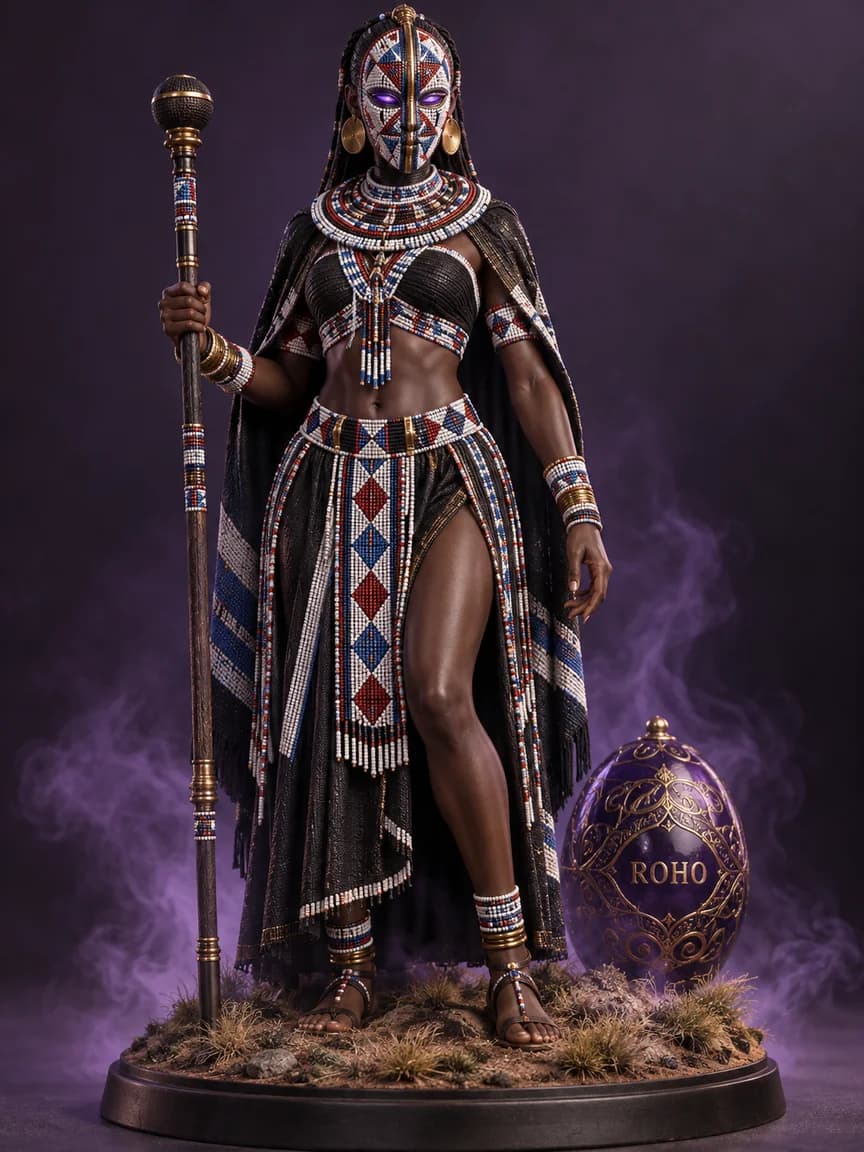
An ancient ritual mask of vegetable ivory, amethyst and sacred wood, engraved with symbols of ancestors and magic, embodiment of the power of Itongo
Era
Ancient cycle
Frequently asked questions
What is an itongo?
An itongo, in the plural amatongo, is in the Zulu religion the spirit of a deceased person become a tutelary ancestor. Watching over its family, it conveys counsel, warnings and omens, most often in the course of dreams. It is honoured with cattle sacrifices and beer, and its displeasure is feared.
What is the difference between itongo and idlozi?
Both words designate the ancestral spirit, and tradition often uses them together. Certain usages distinguish the idlozi, the spirit that invests a person to make of them a diviner or healer, from the itongo, the deceased ancestor honoured by the family. These nuances vary according to regions and authors.
How do the amatongo communicate with the living?
Chiefly through dreams and visions. The word amathongo is linked to ubuthongo, deep sleep, which underlines this bond. The ancestors can also manifest themselves through signs, sickness or the call addressed to a future diviner. The diviner, sangoma, serves as the privileged intermediary between them and the community.
Related spirits
Further reading
Sources and references
- Henry Callaway, The Religious System of the Amazulu, 1868-1870
- Axel-Ivar Berglund, Zulu Thought-Patterns and Symbolism, 1976
- Dictionary of South African English, entree itongo