Ikenga
neutralSpirit
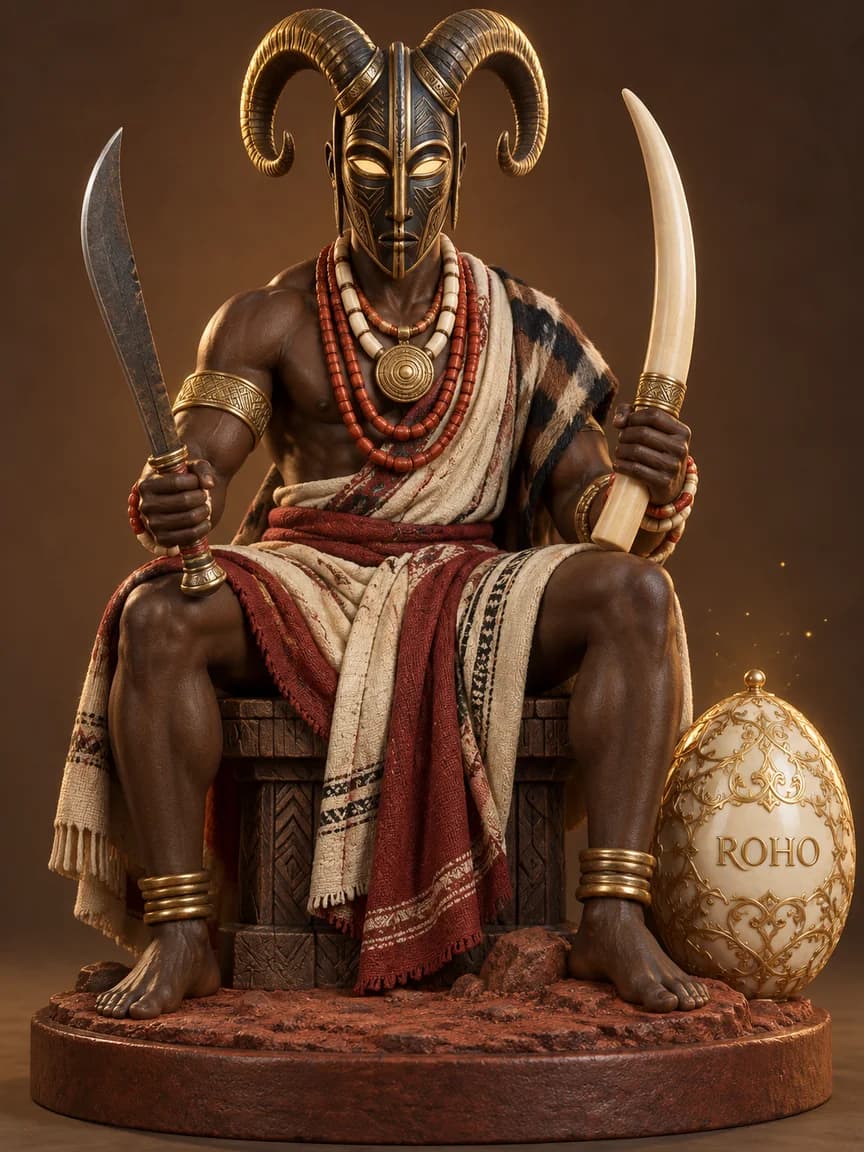
Ikenga is at once a spirit and the object that embodies it: a horned wooden figure that every accomplished man, and sometimes certain women, consecrates to shelter the strength of his right arm, aka ikenga. The ram's horns that crown it speak of power and obstinacy; the forms range from the simple horned block to great statues of a seated man holding a machete in one hand and a trophy in the other, abundantly documented by Herbert M. Cole and Chike C. Aniakor. The ikenga binds the chi, the personal spirit received from Chukwu, to the ike, the power to act: before an undertaking, a farming season, a trading journey or, in former times, a war, its owner offers it kola nuts, palm wine or the blood of a cock, and gives it thanks after success. If luck persists in fleeing, the figure may be reprimanded, even abandoned. At the death of its holder, the ikenga is split in two or burnt: its strength is not handed down, each man must build his own. Neighbouring institutions exist among the Edo and the Igala, a sign of the antiquity of this cult of personal accomplishment in the Lower Niger region.
Powers & Attributes
Role in the ROHO universe
Voice of its pantheon. IKENGA carries the memory of its tradition and weaves a thread into the Mabioni. Bound to the Igbo pantheon. Its alignment depends on the invoker's protocol.
Sacred Mask
An ancient ritual mask of sacred wood, old metal and black stone, engraved with symbols of time and success, embodiment of the power of Ikenga
Era
Ancient cycle
Frequently asked questions
What is the ikenga among the Igbo?
Ikenga is the Igbo spirit of the strength of the right arm, of success and of personal accomplishment. Embodied in a wooden statuette with ram's horns consecrated by its owner, it unites the chi, the personal spirit, with the will to act, receives kola and palm wine before any undertaking, and its figure is destroyed at the holder's death.
Why does the ikenga bear ram's horns?
The ram's horns express strength, combativeness and perseverance: the ram strikes with its head and does not retreat. On the most elaborate figures, the seated man holds a machete, the instrument of action, and sometimes a trophy, the sign of success. The whole materialises the ike, the power to act, which the owner activates with offerings before each undertaking.
What becomes of the ikenga at its owner's death?
It is split in two or burnt, for the strength it shelters is strictly personal: it is not inherited. Each man must consecrate his own ikenga and build his success with his chi. This ritual destruction distinguishes the ikenga from the family altars handed down from generation to generation, and speaks of the value Igbo culture places on individual accomplishment.
Related spirits
Further reading
Sources and references
- Herbert M. Cole et Chike C. Aniakor, Igbo Arts: Community and Cosmos (1984)
- Northcote W. Thomas, Anthropological Report on the Ibo-Speaking Peoples of Nigeria (1913)
- Elizabeth Isichei, A History of the Igbo People (1976)