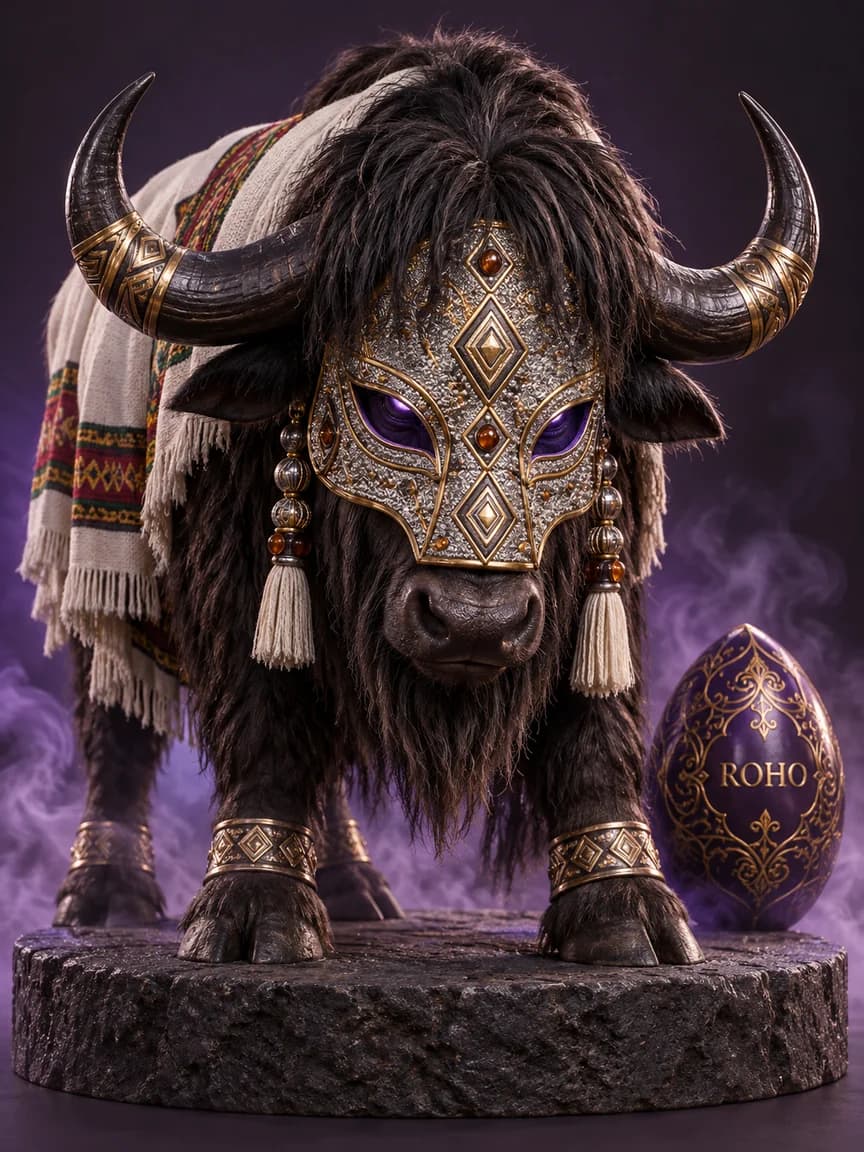
Catopleba
neutralMonster
The catoblepas is a legendary creature described since antiquity, which Pliny the Elder places in Ethiopia, near the supposed sources of the Nile. Its name comes from the Greek and means the one who looks downward, on account of its head so heavy that it hangs permanently toward the ground. Pliny presents it as a beast of middling size, slow and ponderous, whose gaze is deadly: whoever meets its eyes perishes on the spot, in the manner of the basilisk. The weight of its head, which prevents it from raising it, paradoxically protects humans from that fatal gaze. Aelian gives a variant: he makes it a herbivore the size of a bull, with bloodshot eyes and heavy lids, in which the danger comes not from the gaze but from the poisoned breath, fed on venomous plants. Modern naturalists, including Georges Cuvier, saw in this account a transposition of the wildebeest. The catoblepas has durably fed the imagination, notably in Gustave Flaubert's Temptation of Saint Anthony.
Powers & Attributes
Role in the ROHO universe
Ferryman of souls. CATOPLEBA ensures the circulation of souls and prevents stagnation between the worlds. Bound to the Ethiopian pantheon. Its alignment depends on the invoker's protocol.
Sacred Mask
An ancient ritual mask of vegetable ivory, amethyst and sacred wood, engraved with symbols of death, embodiment of the power of Catopleba
Era
Ancient cycle
Frequently asked questions
What does the name catoblepas mean?
It comes from the Greek and means the one who looks downward, an allusion to its head so heavy that it stays turned toward the ground and cannot be raised.
How does the catoblepas kill?
According to Pliny the Elder, with its deadly gaze, like the basilisk. According to Aelian, with its poisoned breath, for it feeds on venomous plants.
Which real animal may have inspired this legend?
Naturalists, including Georges Cuvier, have likened the catoblepas to the wildebeest, whose massive bearing and low-hanging head evoke the ancient description.
Related spirits
Further reading
Sources and references
- Pline l'Ancien, Histoire naturelle, livre VIII, 32
- Élien, La Personnalité des animaux, VII, 6