Bes
neutralDwarf god protector of the home
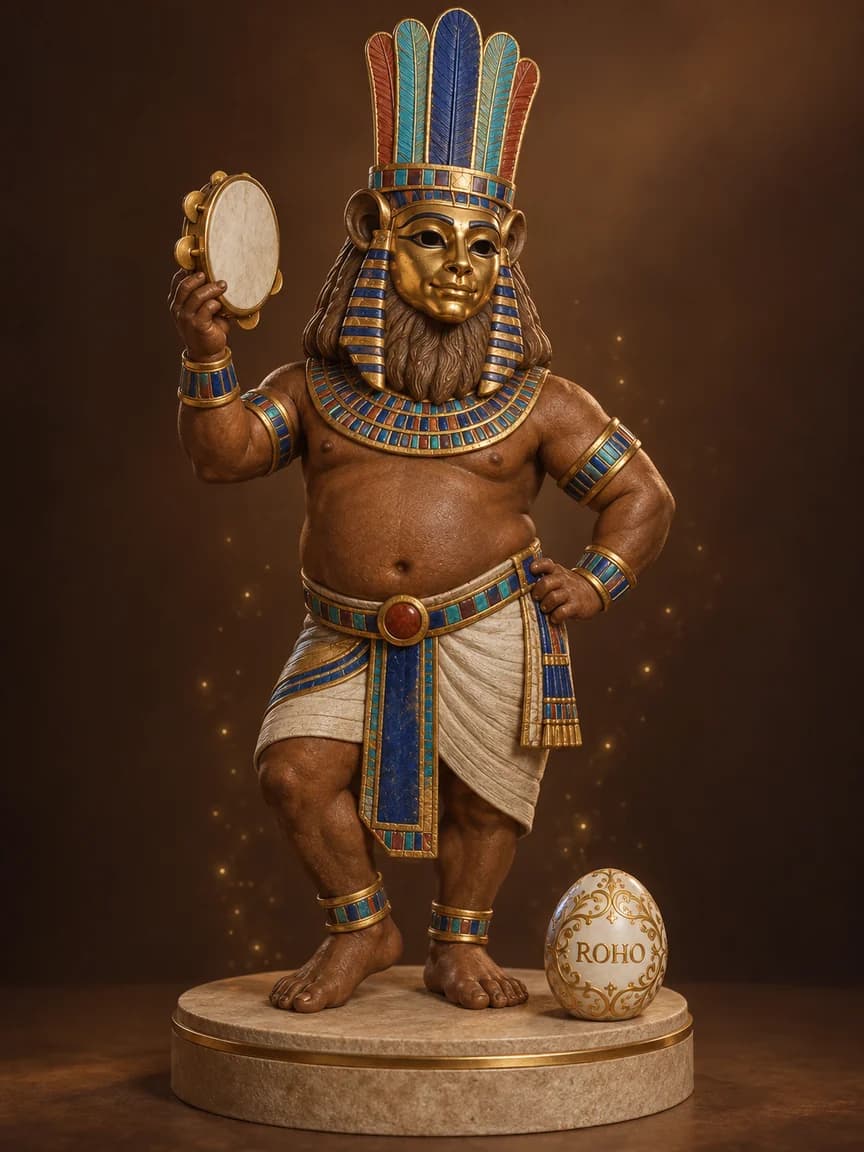
Bes is a protective deity of ancient Egypt, particularly popular in domestic life and family piety. Probably of Nubian or African origin, he grows in importance from the New Kingdom, then in the Late and Graeco-Roman periods. His iconography is atypical: a stocky dwarf with short legs and long arms, with a bearded leonine face, often sticking out his tongue, crowned with a plume, and represented frontally, a rare thing in an Egyptian art that favours the profile. He frequently wears a lion or panther skin. Bes watches over the home, sleep, sexuality and fecundity. An apotropaic genie, he drives away serpents, scorpions, evil spirits and the dangers of everyday life. He protects above all pregnant women and newborns, a role he shares with the goddess Taweret. Associated with music, dance and joy, he appears playing the tambourine or other instruments. His image adorns amulets, mirrors, kohl vases, headrests and beds, so many objects meant to repel evil. The popular deity par excellence, he has no great state temple but a considerable presence in domestic magic and art.
Era
3,000 to 30 BCE
Frequently asked questions
Why is Bes represented frontally?
Unlike most Egyptian gods shown in profile, Bes stares at the viewer face on. This frontal gaze reinforces his apotropaic function, meant to frighten and repel evil forces.
Whom did Bes protect first and foremost?
The home and its inhabitants, and above all pregnant women, women in childbirth and infants. His image was placed on amulets and furniture to ward off the dangers of sleep and of birth.
Did Bes have a temple?
He possessed no great state temple, but was omnipresent in domestic devotion, magic and everyday objects, which makes him one of the most popular gods of the whole people.
Related spirits
Further reading
Sources and references
- Richard H. Wilkinson, The Complete Gods and Goddesses of Ancient Egypt (2003)
- Françoise Dunand, Christiane Zivie-Coche, Gods and Men in Egypt: 3000 BCE to 395 CE (2004)
- , Wikipedia (FR/EN)