Aziza
allyForest fairies, magic
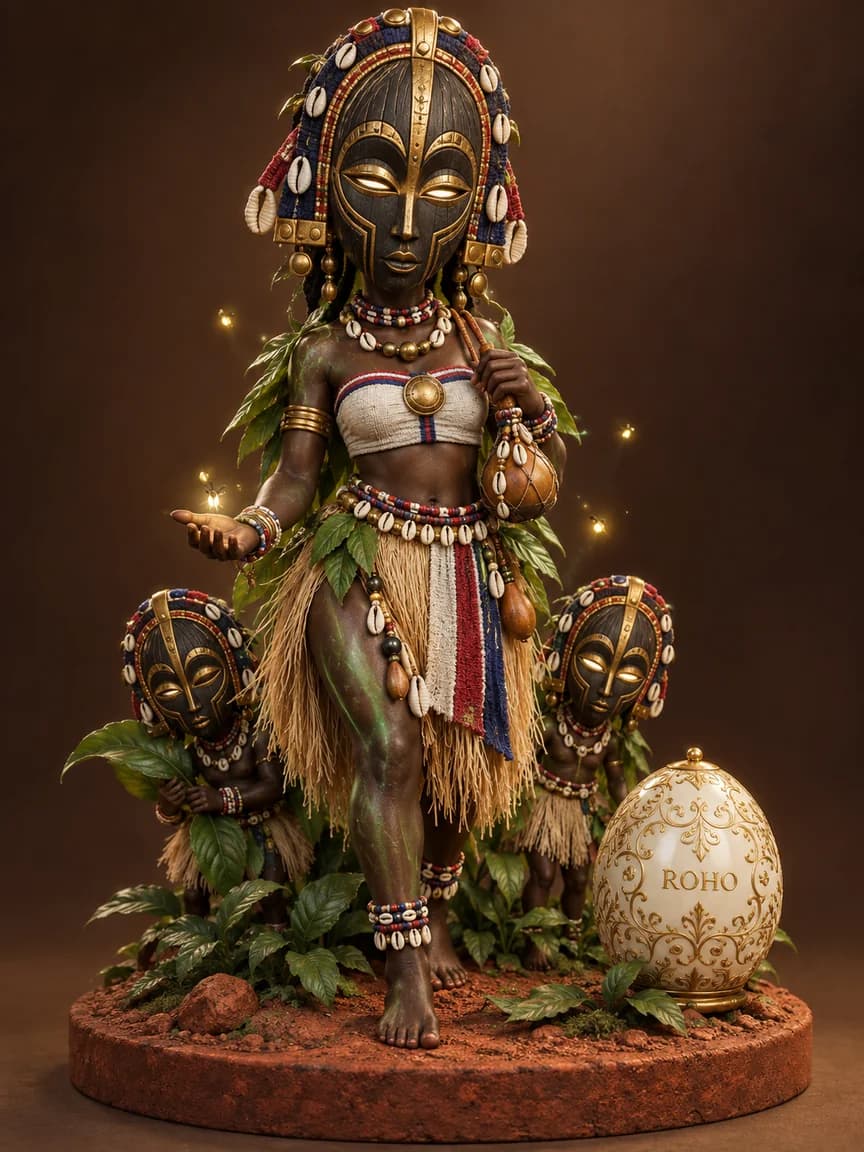
The aziza, also azizan, are benevolent forest spirits in the Fon and Ewe traditions of Dahomey, present-day Benin, and the neighbouring regions of Togo. Described as a little people living in the heart of the woods, in anthills and in the trunks of silk-cotton trees, they appear sometimes covered in hair and knee-high to a child, sometimes furnished with wings and a faint glow: the winged representations belonging mostly to recent sources. Tradition assigns them the role of passers of knowledge. They are said to have taught humans practical and spiritual knowledge, in particular the use of fire, and to have handed on to humankind a part of the vodun, the deities still venerated in the region. They grant hunters good magic and protective charms, provided the forest is respected and offerings are left for them. From those who approach them with greed or disrespect, they simply withdraw. They are also known among the Urhobo of the Niger delta.
Powers & Attributes
Role in the ROHO universe
A fragment of Onionkupón's Breath, bound to one of the five elements of the cosmic balance.
Sacred Mask
A mask carved of ancient energy: a symbol of the cosmic force proper to its pantheon.
Era
3,000 to 1,000 BCE: Cycle of Elemental Powers
Spiritual Lesson
To understand the nature of one's own balance and the wisdom hidden behind every trial.
Words of the Spirit
“The forest whispers to those who know how to listen.”
Frequently asked questions
Where do the aziza come from?
From the mythology of the Fon and Ewe peoples of Dahomey, today Benin, and the neighbouring regions. They are forest spirits, also known among the Urhobo of the Niger delta in Nigeria.
What is the role of the aziza?
They help hunters by granting them good magic and protective charms, and tradition credits them with passing on to humans practical and spiritual knowledge, notably the use of fire and a part of the vodun.
What do the aziza look like?
The descriptions vary. They are often presented as a little people covered in hair, knee-high to a child, living in anthills and silk-cotton trees. More recent versions credit them with wings and a nocturnal glow.
Related spirits
Further reading
Sources and references
- Philip M. Peek et Kwesi Yankah, African Folklore: An Encyclopedia
- Melville J. Herskovits et Frances S. Herskovits, Dahomean Narrative: A Cross-Cultural Analysis (1958)
- Robert D. Pelton, The Trickster in West Africa: A Study of Mythic Irony and Sacred Delight (1980)