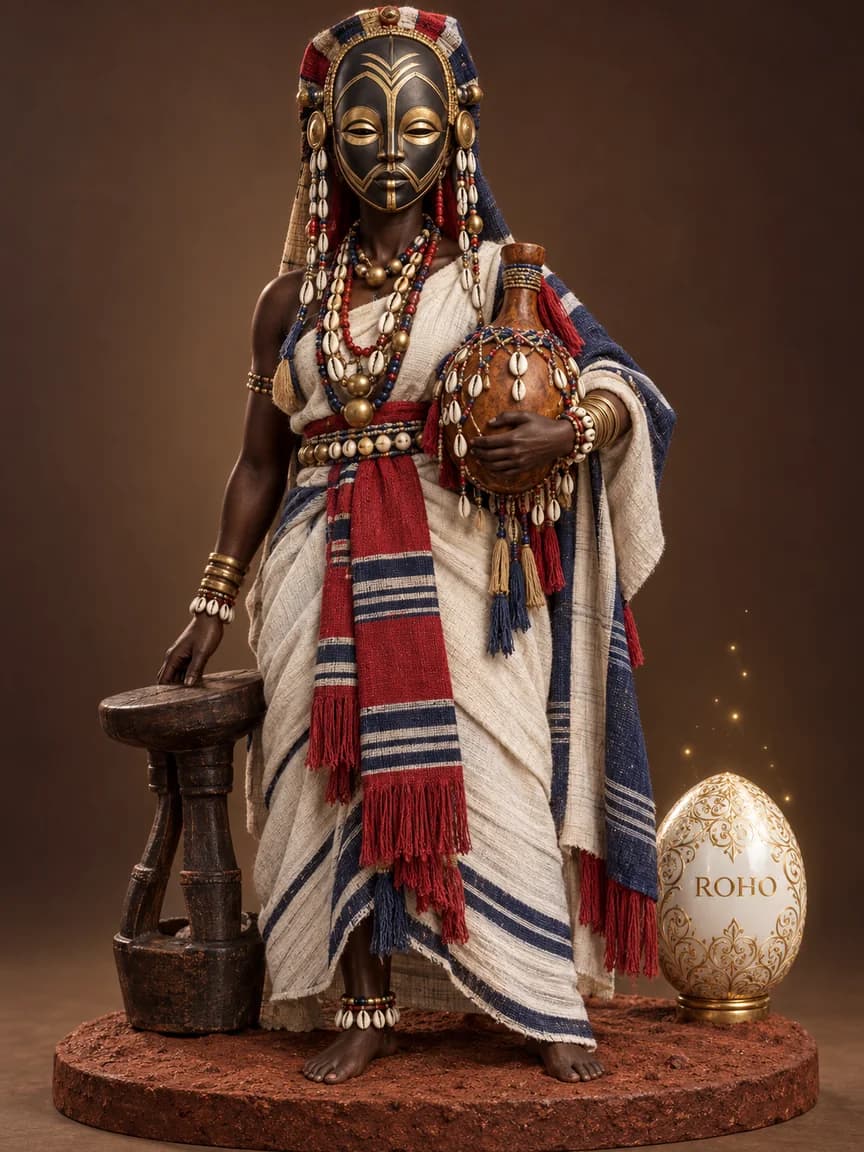
Minona
allyHero
Minona is a goddess of the Fon pantheon, venerated in the area of the former kingdom of Dahomey, today the south of Benin and Togo. She is associated with magic, divination and prophecy, as well as with the protection of women and the home. Tradition presents her as the mother or sister of Legba, the deity of thresholds and crossroads, with whom she shares a closeness to passages and hidden knowledge. To her is attributed the teaching to women of the divinatory arts, notably the reading of palm nuts as omens transmitted by Mawu-Lisa, a mission she is said to have received from Gbadu. Protector of human and agricultural fecundity, she watches over the house, pregnancy and the knowledge handed down from woman to woman. Minona possesses no great official public sanctuaries, her cult unfolding above all at domestic altars that the women keep in their homes. The sources attach her to Fon vodun and to the related traditions of the Gbe area.
Powers & Attributes
Role in the ROHO universe
Sentinel of the hearth. MINONA keeps the domestic thresholds where human life is woven. Bound to the Fon/Eʋe pantheon.
Sacred Mask
An ancient ritual mask of sacred wood, old metal and black stone, engraved with symbols of family of Legba, embodiment of the power of Minona
Era
Ancient cycle
Frequently asked questions
Is Minona the mother or the sister of Legba?
The traditions vary. Some present her as the mother of Legba, others as his sister. In both cases, she is closely associated with this deity of thresholds and crossroads.
What are Minona's domains?
She is bound to divination, prophecy and magic, as well as to the protection of women, to human and agricultural fecundity, and to the preservation of the home.
How is her cult rendered?
Minona has no great public sanctuaries. Her cult is practised above all at domestic altars kept by the women, where divinatory knowledge and practices of protection are handed down.
Related spirits
Further reading
Sources and references
- Melville J. Herskovits, Dahomey: An Ancient West African Kingdom (1938)
- Encyclopedia of Religion, notice « Fon and Ewe Religion »