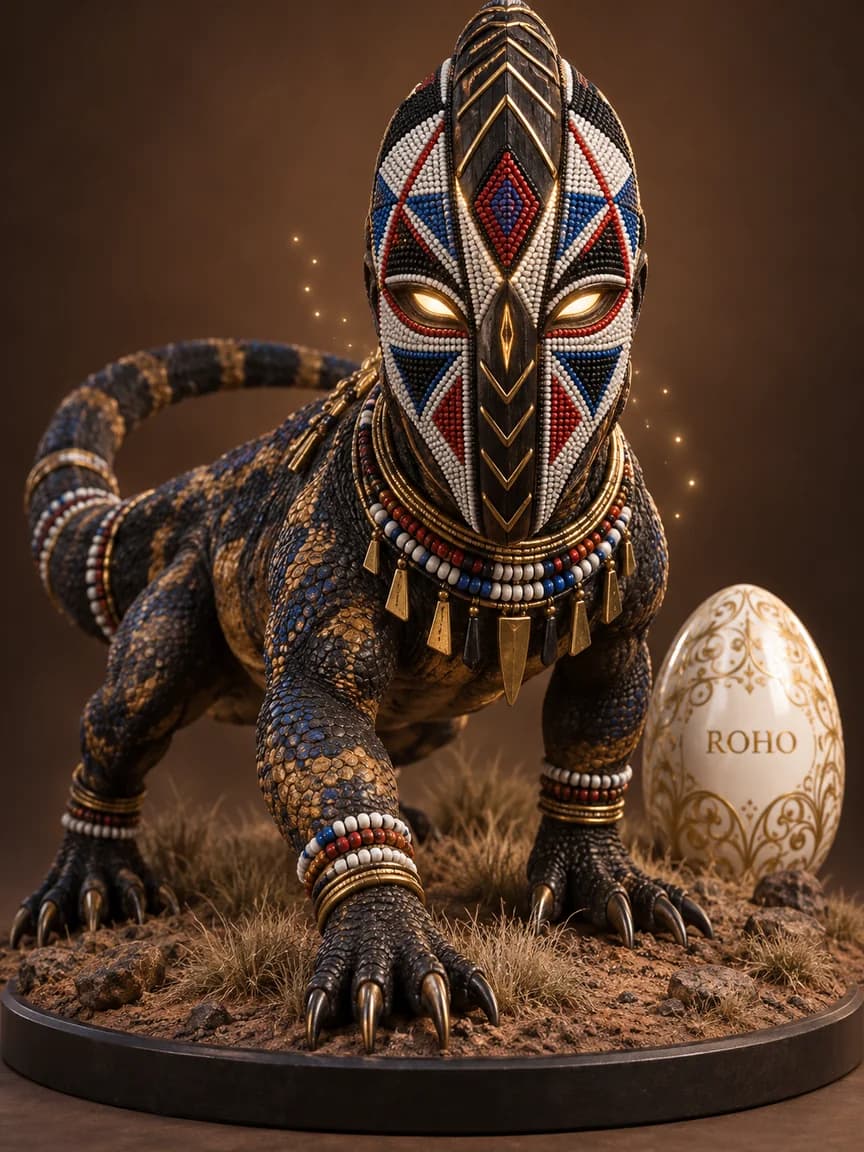
Intulo
neutralSpirit
Intulo is, in the Zulu and more broadly Nguni traditions of southern Africa, the lizard associated with the narrative of the origin of death. The word designates a small lizard with a bluish head. In the myth collected in the nineteenth century by the missionary Henry Callaway, the creator Unkulunkulu first sends the chameleon, unwaba, to carry to human beings the message that they will not die. The chameleon lingers on the way, eats, basks in the sun. The creator then changes his mind and dispatches the lizard, intulo, with the opposite message: humans shall die. The lizard, swift, arrives first, and its word becomes law. Thus death enters the world. This motif of the failed message is widespread throughout sub-Saharan Africa. In Zulu popular culture, the intulo keeps a reputation as a bad omen: seeing this lizard slip into a hut passes for a baleful sign, while the chameleon, slower, remains surrounded by cautious respect. Certain modern presentations describe the intulo as a hybrid being, half man half lizard, but the ethnographic tradition makes of it above all the animal messenger of an aetiological narrative explaining why humans are mortal.
Powers & Attributes
Role in the ROHO universe
Founding presence. INTULO stands at the root of the world and sustains the weave since before the beginning. Bound to the Zulu pantheon. Its alignment depends on the invoker's protocol.
Sacred Mask
An ancient ritual mask of sacred wood, old metal and black stone, engraved with symbols of creation, embodiment of the power of Intulo
Era
Ancient cycle
Frequently asked questions
What role does the intulo play in Zulu mythology?
Intulo is the messenger lizard of the narrative on the origin of death. The creator Unkulunkulu first sends the chameleon unwaba to announce to human beings that they will live forever, then, having changed his mind, dispatches the lizard intulo to carry the opposite message. The lizard arrives first, and its word makes humans mortal.
Why does the intulo have a bad reputation?
Because tradition attributes to it the announcement of human mortality. In Zulu folklore, catching sight of this small bluish-headed lizard slipping into a dwelling passes for a baleful omen. The chameleon, slower, keeps by contrast a more respected place, in memory of the message of life it should have delivered.
Where does this narrative come from?
It was collected in the nineteenth century by the missionary Henry Callaway in The Religious System of the Amazulu, from Zulu testimonies. The motif of the failed message between two animals, one bearing life, the other death, is found in many traditions of sub-Saharan Africa.
Related spirits
Further reading
Sources and references
- Henry Callaway, The Religious System of the Amazulu, 1868-1870
- Alice Werner, Myths and Legends of the Bantu, 1933