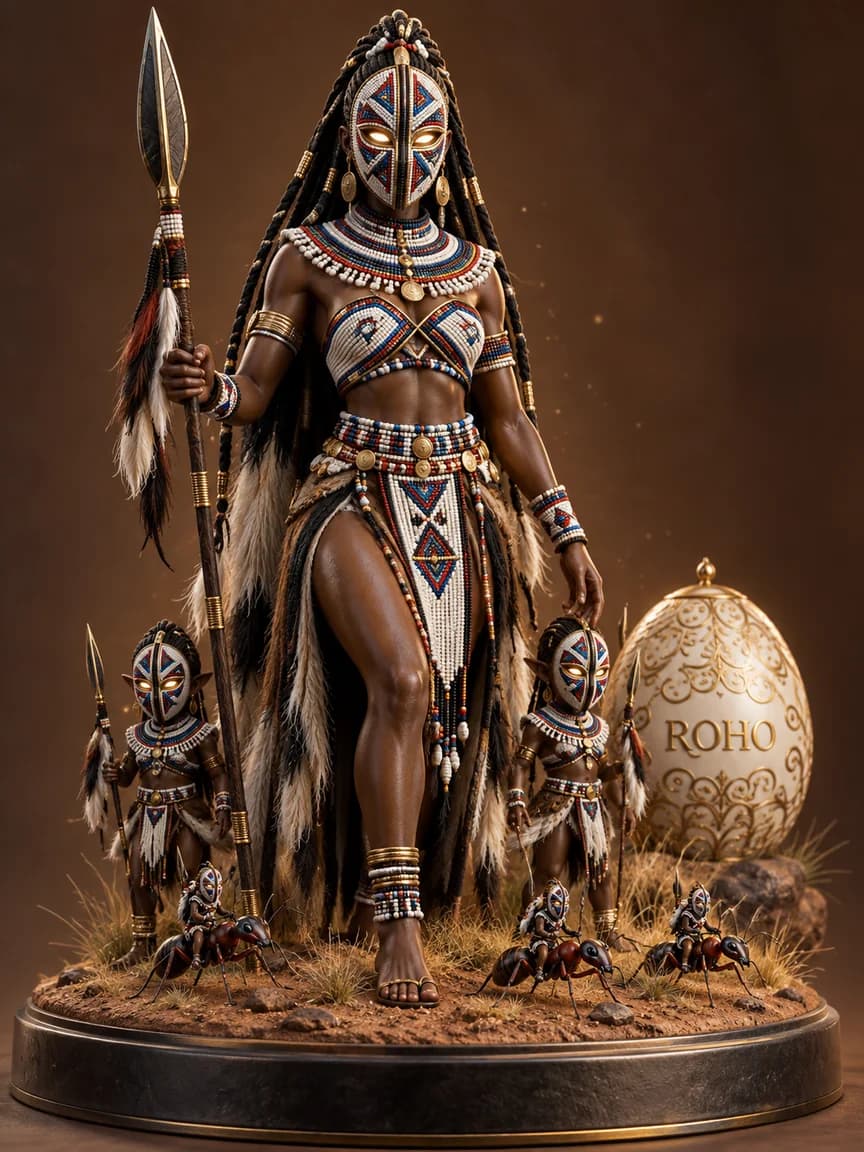
Abatawa
neutralSpirit
The Abatwa, umutwa in the singular, are tiny beings of the folklore of the Zulu of South Africa. Tradition describes them as nomadic hunters so small that they can hide beneath a blade of grass, sleep in anthills and ride ants. Despite their size they are feared, for they are armed with poisoned arrows capable of felling large game or a man. Touchy and proud, they are said to bear ill any reminder of their smallness. According to the accounts, only very young children, pregnant women and diviners can catch sight of them. This figure was collected in the nineteenth century by the missionary Henry Callaway in his gatherings of Zulu tales and traditions. Commentators note that the word abatwa also designates, in Zulu, the San populations known as Bushmen, hunter-gatherers of southern Africa, so that the storybook creature overlays the memory of a real people. They should not be confused with the Twa or Batwa, pygmy peoples of Central Africa, who bear a neighbouring name but form a distinct ethnic group.
Powers & Attributes
Role in the ROHO universe
Keeper of the two hands. ABATAWA sends the fevers and withdraws them as the measure demands. Bound to the Zulu pantheon. Its alignment depends on the invoker's protocol.
Sacred Mask
An ancient ritual mask of sacred wood, old metal and black stone, engraved with symbols of faery, embodiment of the power of Abatawa
Era
Ancient cycle
Frequently asked questions
What are the Abatwa?
The Abatwa are tiny beings of Zulu folklore, described as nomadic hunters small enough to hide beneath a blade of grass, sleep in anthills and ride ants. They are said to be dangerous despite their size, for their poisoned arrows can kill a large animal or a man.
Who can see the Abatwa according to tradition?
According to the Zulu accounts, the Abatwa are extremely touchy and would accept being seen only by very young children, pregnant women and diviners. To remind an Abatwa of his small size would be taken as a grave offence that could bring on an attack.
Should the Abatwa be confused with the Batwa of Central Africa?
No. The Abatwa of Zulu folklore are storybook beings, and the word moreover designates, in Zulu, the San populations of southern Africa. The Twa or Batwa of Central Africa are another matter entirely: very real hunter-gatherer peoples of the Great Lakes region, despite the resemblance of the names.
Related spirits
Further reading
Sources and references
- Henry Callaway, Nursery Tales, Traditions, and Histories of the Zulus (1868)