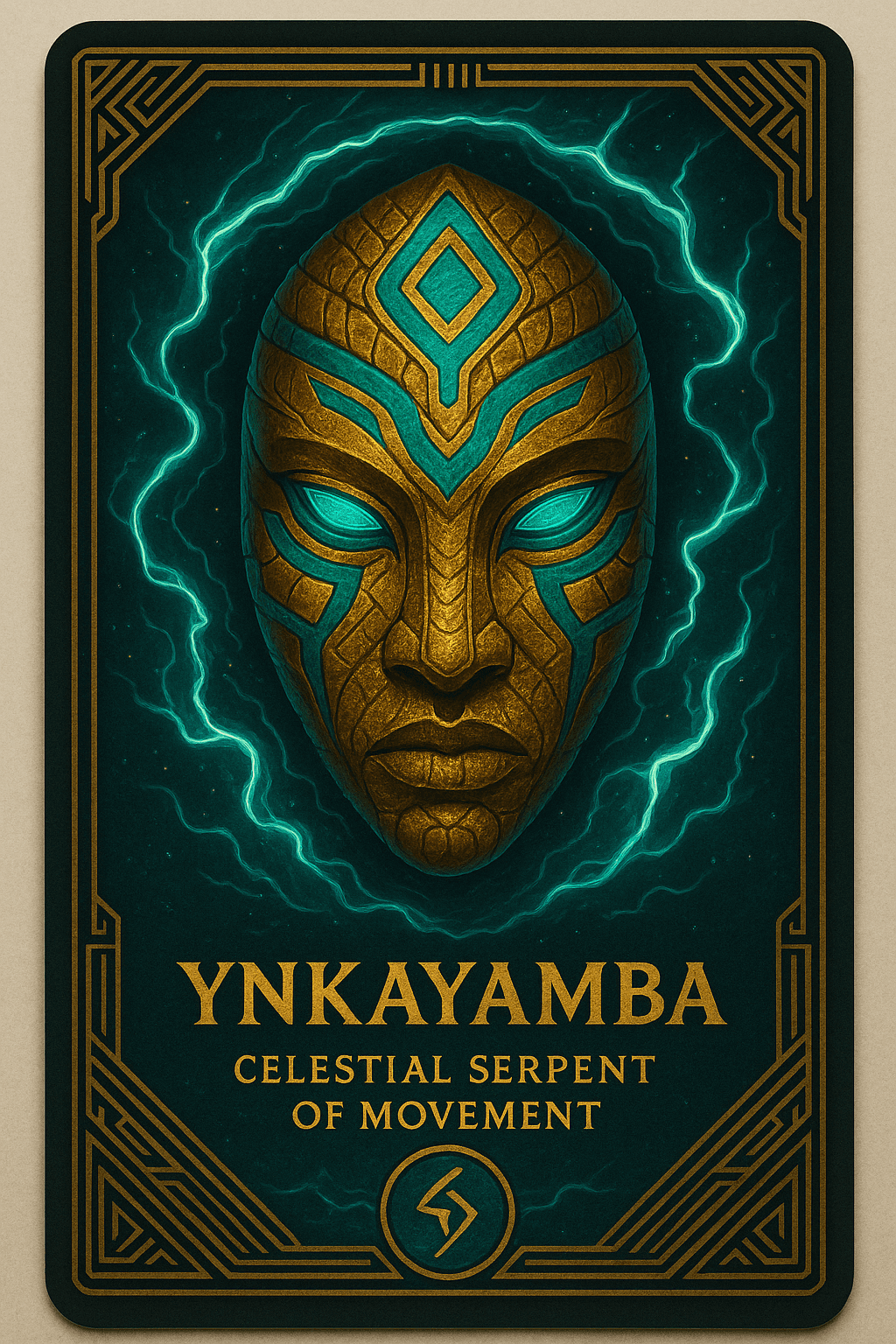
Inkanyamba
antagonistThe Storm Serpent / Ikanyamba
Inkanyamba belongs to the living beliefs of the Zulu and, more broadly, Nguni peoples of South Africa. It is described as a gigantic serpent, sometimes with a head recalling that of a horse, dwelling in the deep pools of rivers and waterfalls. The most famous site associated with it is Howick Falls, kwaNogqaza in the Zulu language, on the uMngeni River in KwaZulu-Natal: tradition places its home in the chasm at the foot of the falls. The word inkanyamba also means tornado in Zulu, and there lies the heart of the belief: during the southern summer the serpent rises into the air, and its anger breaks out in violent storms, hail and waterspouts. Contemporary accounts link destructive tornadoes, such as those of the Hogsback region in 1998, to its passing, and local artists have shaped clay figurines of it that scholars have studied. Around Howick Falls, traditional healers still leave offerings and hold the place sacred; only the initiated, it is said, may approach the pool without danger. Inkanyamba belongs to the indigenous weather knowledge of southern Africa documented by researchers, and it should be spoken of with respect: for many people of the region it is not a legend of the past but a present reality.
Powers & Attributes
Role in the ROHO universe
One of the first spirits corrupted by the NZI. Its return to the NZA is one of the great stakes of Cycle I.
Sacred Mask
A serpentine mask with thunder scales, split by flashes of electric light.
Era
3,000 to 1,000 BCE: Cycle of Powers
Words of the Spirit
“The storm gives no warning. It arrives.”
Frequently asked questions
What is the Inkanyamba?
Inkanyamba is a giant serpent of Zulu belief, master of storms and tornadoes, whose name is also the Zulu word for tornado. Tradition holds that it lurks in the deep pools of South Africa's rivers and waterfalls, most famously beneath Howick Falls in KwaZulu-Natal. It remains a living belief in the region.
Why is the Inkanyamba linked to Howick Falls?
Zulu tradition places the Inkanyamba's home in the chasm at the foot of Howick Falls, kwaNogqaza, on the uMngeni River. The site is held sacred: traditional healers leave offerings there, and it is said that only the initiated may approach the pool without danger. Accounts from witnesses claiming to have seen the creature keep its reputation alive.
Is the Inkanyamba still part of present-day belief?
Yes. In South Africa, tornadoes and violent storms are still sometimes attributed to the Inkanyamba's anger, and researchers have collected contemporary accounts and representations, such as the clay figurines made in the Hogsback region after the tornadoes of 1998. Understanding this figure means placing it within the indigenous weather knowledge of southern Africa, with respect for those who hold the belief.
Related spirits
Further reading
Sources and references
- Peter G. Alcock, Rainbows in the Mist: Indigenous Weather Knowledge, Beliefs and Folklore in South Africa (2010)
- Felicity Wood, The Snake in the Sky: Tornadoes in Clay and Local Narrative in the Hogsback-Alice Area (2000)
- Penelope S. Bernard, Messages from the Deep: Water Divinities, Dreams and Diviners in Southern Africa (2010)