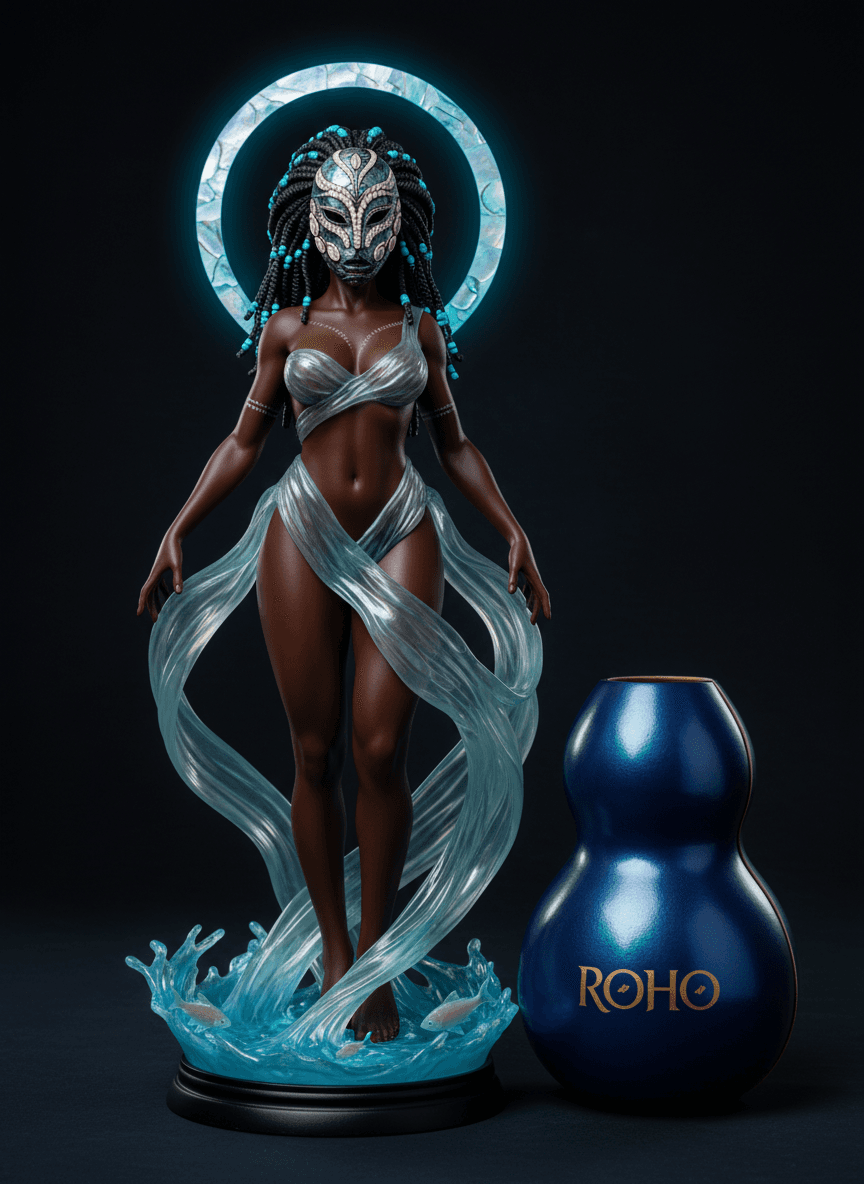
Simbi Bia Maza
allyWaters, destinies
The simbi, singular simbi, plural bisimbi, are guardian spirits of water and nature in the traditional Bakongo religion of Central Africa. The expression simbi bia maza designates the simbi of the waters, nkisi mia mamba in Kikongo. They are believed capable of taking several forms, human, serpent, calabash or spark of fire (kalunga), and are held to be powerful healers, invoked in rites of healing and purification and associated with fertility and abundance. They dwell in rocks, ravines, springs and pools, and serve as intermediaries between the living and the world of the ancestors. The word is said to come from simba, to hold or preserve in Kikongo. Carried off by the Atlantic slave trade, the bisimbi survive in Afro-diasporic traditions such as the hoodoo of the southern United States and Palo.
Powers & Attributes
Role in the ROHO universe
A fragment of Onionkupón's Breath, bound to one of the five elements of the cosmic balance.
Sacred Mask
A mask carved of ancient energy: a symbol of the cosmic force proper to its pantheon.
Era
3,000 to 1,000 BCE: Cycle of Elemental Powers
Spiritual Lesson
To understand the nature of one's own balance and the wisdom hidden behind every trial.
Words of the Spirit
“The waters keep the memory of what the earth forgets.”
Frequently asked questions
What does simbi bia maza mean?
The expression designates the simbi of the waters, in Kikongo nkisi mia mamba: the aquatic category of the bisimbi nature spirits in Bakongo religion.
What is their role?
They are held to be powerful healers, associated with fertility and abundance, and serve as intermediaries between the world of the living and that of the ancestors.
Did they survive outside Africa?
Yes. With the Atlantic slave trade, the cult of the bisimbi carried on in Afro-diasporic traditions such as the hoodoo of the southern United States and Palo.
Related spirits
Further reading
Sources and references
- Wikipedia (EN) : Simbi
- Wikidata : Q3484100